Last updated October 15, 2026








Free written scope consultation - allowances, timeline, and change-order rules on paper before a single trade is scheduled
General Contractor Maintenance Checklist for Ventura Homeowners
A roof that survives October’s Santa Ana winds can still fail in January if the flashing wasn’t reseated. That’s the pattern we see across Ventura year after year: wind lifts, and rain finds what wind loosened. Most maintenance checklists are built from a national template that tells you to “check your roof” without telling you when, why, or what happens between seasons. This guide is different. We built it around the actual sequence Ventura homes go through each year: dry offshore winds in fall, followed by wet winters, followed by salt-air summers near the coast. By the end, you’ll know exactly what to inspect, when to inspect it, and what to document so a warranty claim is easy to support if something fails.
Quick Answer
A Ventura home maintenance checklist should follow the seasonal stress sequence: pre-Santa Ana wind inspections in October, post-storm drainage checks after winter rains, and salt-air corrosion checks before summer for homes within a mile of the coast. The highest-value tasks are inspecting ridge cap fasteners, reseating flashing, clearing weep screed, checking crawl space vapor barriers, and documenting every inspection with dated photos. Most of this takes a weekend per season, and the documentation habit matters more than the inspection itself.
Styles & brands we work with







Table of Contents
- Pre-Santa Ana Wind Inspection (October): What Actually Blows Loose
- Post-Storm Drainage Checks for Ventura Hillside and Flatland Homes
- Salt-Air Corrosion Within One Mile of the Coast
- What a Licensed General Contractor Checks That Homeowners Skip
- How to Document Every Inspection for Warranty Support
- The Full Seasonal Sequence, Month by Month
- Common Mistakes to Avoid
- When to Call a Professional
- Frequently Asked Questions
Pre-Santa Ana Wind Inspection (October): What Actually Blows Loose
Santa Ana winds in Ventura don’t damage homes the way hurricanes do. They don’t knock walls down. They loosen things. Wind gets under edges, lifts fasteners, and leaves materials slightly out of position. Then winter rain arrives and exploits every loose seam. The October inspection is about finding what the wind will use as a grip point.
In our experience walking Ventura homes before wind season, three specific failures show up repeatedly:
- Ridge cap fasteners: The ridge cap is the row of shingles or tiles along the peak of the roof. Wind pushes against it from one side, and over years, the fasteners back out a quarter inch at a time. You won’t see this from the ground. You need a ladder, or you need someone on the roof. Loose ridge caps let water enter at the exact highest point of the roof, where it can travel down rafters before showing up as a ceiling stain weeks later.
- Fence post anchors: Ventura fences, especially in neighborhoods like Midtown and College Area, sit in sandy, fast-draining soil. The soil doesn’t hold posts as firmly as clay would. After a decade, post anchors corrode and wobble. A Santa Ana gust can take a wobbly fence from leaning to fallen in thirty seconds. Check every post that borders open space or a street with no windbreak.
- Attic vent covers: Gable vents and eave vents have covers, usually aluminum or vinyl, that clip or screw into place. Wind gets behind them, the clips snap, and suddenly you have a hole in your roofline. A missing vent cover is an open invitation to rodents and rain. Look for vents on the windward side of the house, which in Ventura usually means the northeast and east faces during Santa Ana season.
Step-by-Step October Walkthrough
- Walk the perimeter of the house with a camera. Photograph every vent, flashing, and roof edge from the ground before you get on any ladder.
- Check each fence post with a firm push. A post that moves more than a half inch at ground level has a failing anchor.
- Inspect attic vent covers from outside, then from inside the attic if accessible. Look for daylight where there shouldn’t be any.
- On the roof (or from a ladder at the eaves), press gently on ridge cap pieces. Movement means the fastener has backed out.
- Photograph anything loose or damaged. Note the date in the photo filename.
If you’re not comfortable on a roof, this is the moment to call a General Contractor in Ventura. A roof inspection from the ridge line catches things a ground-level look never will.
Post-Storm Drainage Checks for Ventura Hillside and Flatland Homes
Water follows the shape of the land, and Ventura has two very different shapes. Hillside homes in the Foothill and Ondulando areas deal with water moving fast downhill, scouring soil and overwhelming drainage inlets. Flatland homes west of the 101 deal with standing water, slow percolation, and water that finds every low spot in a concrete foundation. Different profiles, different failure points.
Hillside Drainage Checks
- Slope drains and scuppers: Every hillside home in Ventura relies on a system that moves water away from the uphill side of the foundation. Check that slope drains are clear of debris and that scuppers (the openings that let water escape from retaining walls) haven’t been blocked by silt.
- Retaining wall weep holes: Weep holes are small openings near the base of retaining walls that release hydrostatic pressure. When they clog, pressure builds behind the wall, and the wall begins to bow or crack. Look for water staining below each weep hole after rains. Dry stains are a problem, not proof of function.
- Foundation uphill side: After a storm, walk the uphill side of the house. Standing water within six feet of the foundation means drainage has failed. The fix can be as simple as regrading or as involved as a new French drain, but left unaddressed, that water will find the foundation.
Flatland Drainage Checks
- Yard grading: On flat lots, the yard should slope away from the house by about one inch per foot for the first six feet. Settling, gopher activity, and landscaping changes flatten that slope. A quick check with a level and a straight board tells you if your grading needs correction before winter.
- Downspout discharge points: Every downspout should discharge at least three feet from the foundation. In flat Ventura neighborhoods, a surprising number of downspouts terminate right at the foundation stem because a previous owner cut them short. This is the single most common drainage issue we find east of Mills Road.
- Community drains and easements: Some flatland neighborhoods share drainage easements. If the easement on your lot is clogged, water backs up across multiple properties. Check shared drains after every significant storm, even if your own property looks fine. Your neighbors may have a problem that’s about to become yours.
One more note: check your landscape irrigation in whatever season you’re in. A broken sprinkler head spraying the foundation for months causes foundation movement that looks identical to storm drainage failure. The water source differs, but the damage is the same.
Salt-Air Corrosion Within One Mile of the Coast
Salt air is a year-round slow drip of corrosion for homes near the beach in Ventura. The closer to the water, the faster it moves. Within one mile of the coast, the airborne salt concentration is high enough to accelerate corrosion on exterior hardware, flashing, and HVAC equipment. The Keys, Pierpont, and anything west of the 101 near the water are all in this zone.
What Salt Air Attacks First
- Exterior hardware: Gate hinges, door handles, light fixtures, and deck fasteners. Coastal Ventura homes often show rust streaking on these within five years of installation, even when the products claimed to be corrosion-resistant.
- Flashing: Roof flashing, chimney flashing, and window flashing are usually galvanized steel or aluminum. Salt air eats the coating, then the metal. Flashing at the roof-to-wall junction is most exposed, and it’s the piece that fails first.
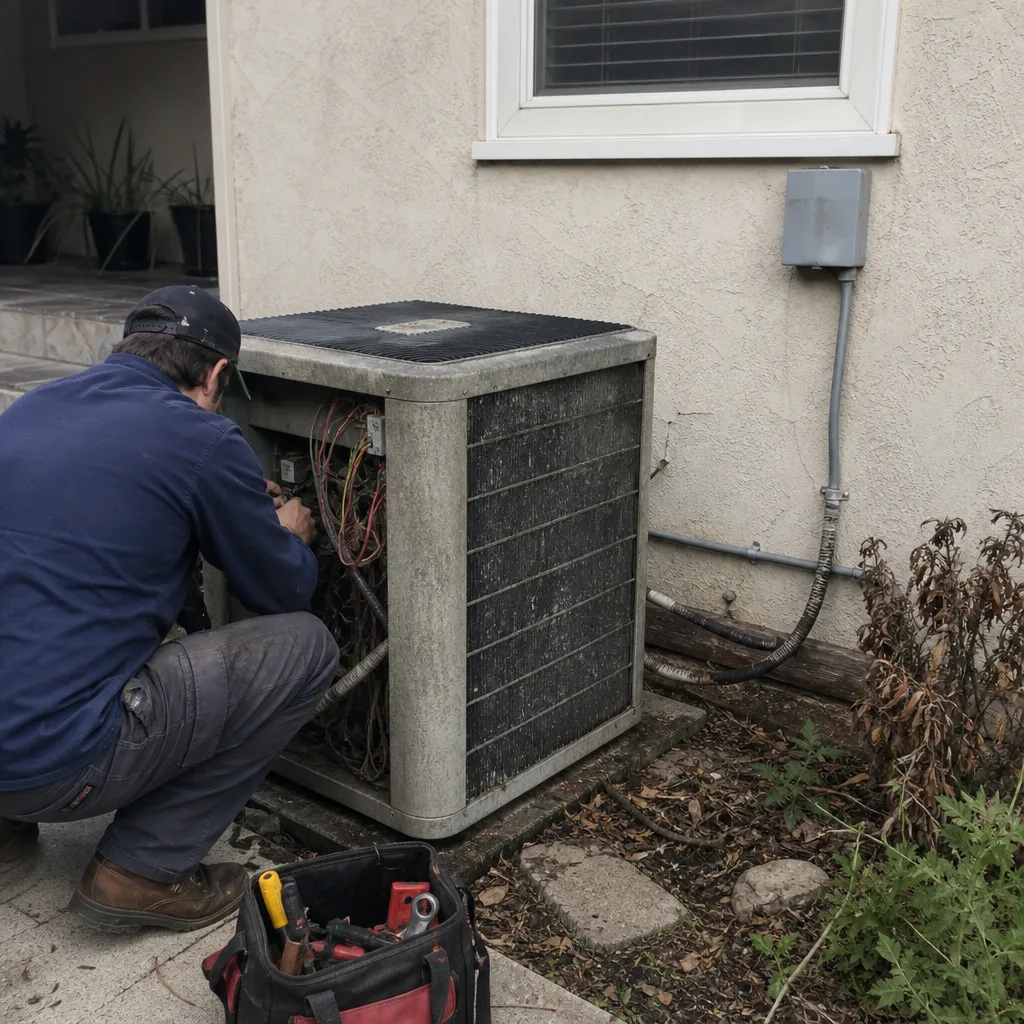
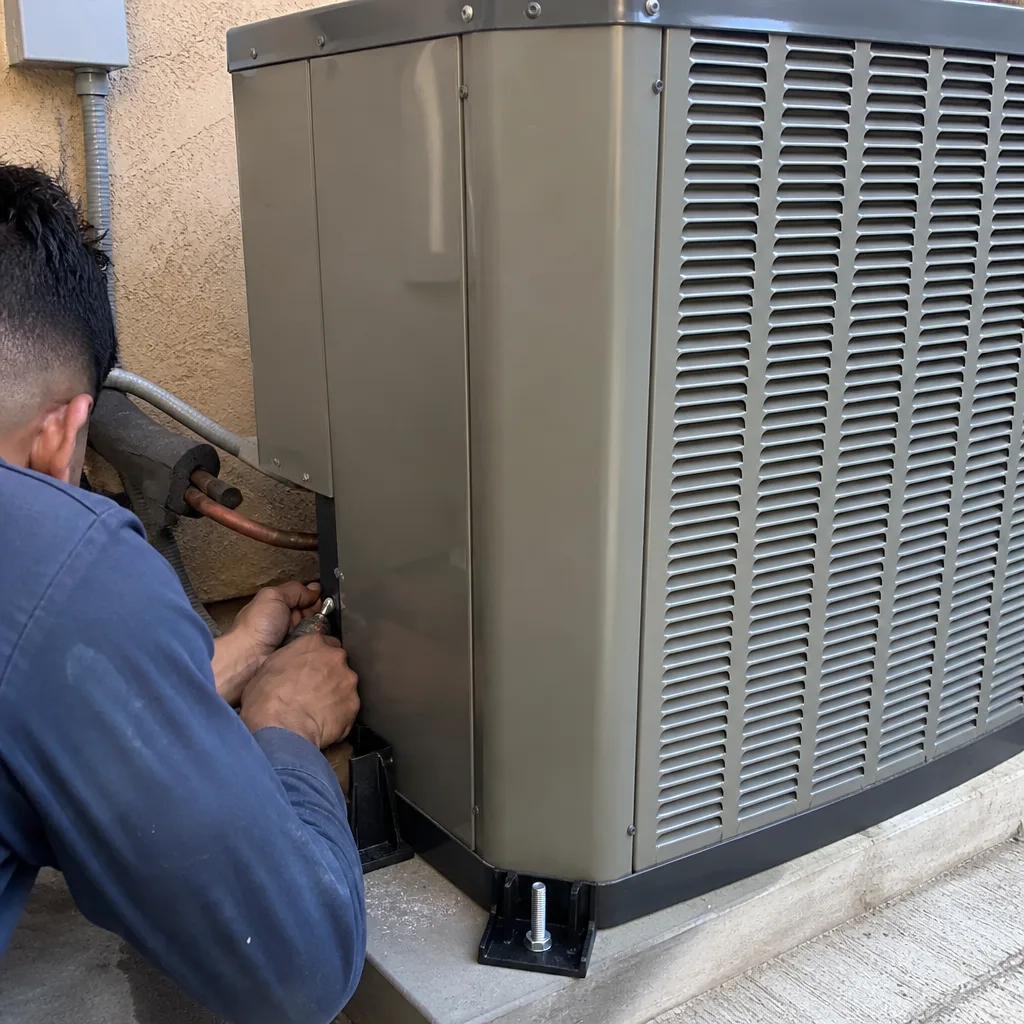
- HVAC condenser coils: The outdoor unit pulls air across the coils constantly during summer. That air carries salt. Corroded coils lose efficiency, and eventually leak refrigerant. We recommend coastal Ventura homeowners have their condenser coils cleaned and inspected every spring, before the cooling season starts.
Salt-Air Inspection Schedule for Coastal Homes
- Every March: Inspect all exterior hardware. Rust streaks, pitting, or flaking coating means replacement is due.
- Every March: Have an HVAC technician clean and inspect condenser coils. Salt and sand accumulate together, and the combination is harder on the unit than either alone.
- Every September: Re-check flashing after the summer sea breeze season. Photograph any exposed bare metal before winter rain finds it.
- Every three years: Consider replacing any hardware that shows rust, even if functional. Once the coating is broken, the underlying metal will not recover.
This schedule isn’t about cosmetic rust. It’s about small failures that become structural. A rusted deck fastener that snaps under load is a safety event, not a maintenance chore.
What a Licensed General Contractor Checks That Homeowners Skip
Most homeowner checklists stay above the floorboards. They cover roofs, gutters, windows, and paint. A licensed contractor’s maintenance pass goes underneath. Three checks separate a professional walkthrough from a homeowner inspection, and they matter because the failures they catch are hidden until they are expensive.
Subfloor Moisture Readings
Bathroom and kitchen subfloors can be saturated months before tiles crack or grout darkens. A moisture meter gives you a number. In Ventura’s coastal climate, anything above 12% moisture content in wood subfloor is cause for investigation. Homes near the water often run 14-16% in problem areas. Catching moisture at that stage means removing and replacing a toilet seal or resealing a tile joint. Catching it at 20% means replacing subfloor.
Crawl Space Vapor Barriers
Many Ventura homes sit on raised foundations with crawl spaces. The vapor barrier (a plastic sheet laid over the dirt) keeps ground moisture from rising into the house. Barriers tear, shift, and get pulled out of place by rodents or inadequate installation. A torn barrier lets moisture rise into floor framing, which feeds mold and attracts termites, which love damp wood. The check: look for standing water under the house, condensation on the framing, and gaps in the plastic. Fixing it often means laying new poly and sealing seams with butyl tape, not a massive project.
Weep Screed Clearance
Weep screed is the metal flashing at the bottom of stucco walls that lets water drain out from behind the stucco. Ventura code requires at least two inches of clearance between the weep screed and soil or hardscaping to keep water from wicking up. Walk the exterior of any stucco home in town and you’ll see plenty of places where soil, mulch, or concrete has been added over the years and now covers the weep screed. That’s a building defect, and it means water stays trapped inside the wall assembly. The fix is usually simple: cut back the soil or hardscape to restore clearance.
These three checks take a contractor about an hour, and they catch problems five to ten years before they become visible. If you’re planning any bathroom remodeling in Ventura or kitchen remodeling in Ventura, asking about subfloor moisture and weep screed clearance before work starts is a good way to know if hidden damage will affect the project scope.
How to Document Every Inspection for Warranty Support
Warranty claims fail for one reason more than any other: no one can prove when the problem started. A 365-day workmanship warranty, like the Done Right Promise we put on every completed project, is straightforward to honor when documentation exists. The photo with a date tells the story: this is what the flashing looked like in October, this is what it looked like after the January storms. Without that photo, the claim becomes a conversation about what someone remembers.
A Documentation System That Actually Works
- Create one album per season per year: “Ventura Home Maintenance – October 2025” or “January 2026 Post-Storm.” This becomes a rolling visual log of the house.
- Photograph everything you inspect, even things that look fine. The photo that proves the flashing was intact before the storm is just as valuable as the photo showing the damage after. You need both.
- Use a consistent order every inspection: roof from east side, roof from west side, gutters, downspouts, crawl space, exterior walls, fence line, HVAC. A consistent order means you can compare the same angle over time.
- Name files with the date and location: “2025-10-15-roof-ridge-east.jpg” is searchable six months later. “IMG_4827.jpg” is not.
- Store photos in at least two places: a cloud backup and a local drive. If a phone dies, the documentation shouldn’t die with it.
- Note any changes immediately: if you see a new crack or rust streak, write one sentence describing it and save it with the photos. The note is evidence.
This habit pays off two ways. First, warranty and insurance claims become factual conversations. Second, you build a visual record of your Ventura home that will be genuinely useful if you ever sell. Buyers trust a homeowner who can show them the maintenance history rather than claiming it.
The Full Seasonal Sequence, Month by Month
Ventura’s climate moves through four distinct stress seasons. Homeowners who follow this sequence stay ahead of each stress before it becomes a repair.
September – October: Santa Ana Preparation
- Inspect ridge cap fasteners and resecure any that move.
- Check fence post anchors with a firm push test.
- Inspect attic vent covers on windward faces.
- Clear gutters of leaves and debris before the winds drop more.
- Trim branches that could break and hit the house during a gust.
November – March: Rain and Drainage
- Check hillside slope drains and scuppers after each significant storm.
- Clear weep holes in retaining walls.
- Walk the uphill foundation after rain; look for standing water within six feet.
- Confirm downspouts discharge at least three feet from the foundation.
- Check shared drainage easements even if your own lot looks fine.
April – June: Salt and Humidity
- For homes within one mile of the coast: inspect all exterior hardware for rust streaks.
- Have HVAC condenser coils cleaned and inspected before cooling season.
- Check crawl space vapor barrier for tears and displacement.
- Inspect weep screed clearance on all stucco walls; restore to two inches minimum.
- Look for signs of rodent activity that picked up during the wet months.
July – August: The Drier Months
- Perform subfloor moisture readings in bathrooms and kitchens with a moisture meter; anything above 12% in wood subfloor needs investigation.
- Inspect window and door weatherstripping while the weather is dry and materials are not swollen.
- Check caulking around exterior openings; summer sun accelerates cracking.
- Test and clean any exhaust fans or ventilation systems before they get used heavily again in fall.
Common Mistakes to Avoid
- Checking the roof only after a leak appears. A roof can have loose ridge caps and failed flashing for months before water reaches the ceiling. By the time you see the stain, the repair is larger and the warranty questions are harder.
- Ignoring downspout discharge points. In flat Ventura neighborhoods, shortened downspouts that dump water at the foundation are the most common drainage problem we see, and they’re almost always a five-minute fix with an extension piece.
- Treating fence posts as a repair item instead of a maintenance item. A leaning fence post caught in September is a quick anchor replacement. The same post after a Santa Ana event may mean a whole fence section down.
- Assuming salt air is only a paint problem. Coastal homeowners often notice chalking paint or rust on fixtures and call it cosmetic. Sea-air corrosion on flashing and HVAC coils is structural and operational, not cosmetic, and it moves fast within a mile of the shoreline.
- Documenting only what looks broken. Warranty support depends on proving the condition before the failure as much as after. The photo of the intact flashing is the one that wins the claim.
- Skipping the crawl space because it’s unpleasant. The vapor barrier and subfloor are where Ventura’s moisture-driven damage starts. Ignoring them means catching problems after they have spread upward into framing and finished floors.
- Treating a broken sprinkler as a spring-only concern. A sprinkler head spraying the foundation for six months causes exactly the same soil movement and foundation stress as storm drainage failure. Check irrigation whenever you check drainage.
When to Call a Professional
This checklist covers what a careful homeowner can inspect with a ladder, a moisture meter, and a camera. Some things need a professional eye, and some things need a professional because the risk of doing it wrong is too high. Getting onto a roof in Ventura during or after wind season is genuinely dangerous work; if you’re not confident on a ladder, don’t test that confidence on a two-story roofline. If you find standing water against the foundation in a hillside home, or if a moisture meter reads above 15% in subfloor, or if the weep screed is covered and you’re not sure how to restore clearance without damaging the stucco, that’s the moment to bring in someone who does this daily. Elmstead Remodeling Ventura offers free estimates in Ventura. Call (341) 218-4316 and we’ll walk the property with you, check the crawl space, and give you a written price for any work that needs doing before it becomes an emergency.
Frequently Asked Questions
Most general contractors in Ventura do not charge for a maintenance walkthrough when you’re already a client or when the inspection is part of a planned project. Independent home inspectors typically charge $300 – $600 for a full home inspection. Drainage-specific inspections and crawl space evaluations often run $150 – $300 as standalone services. Call (341) 218-4316 to ask about a free walkthrough before you commit to an inspection cost.
Yes, and you should inspect it twice per year: once before Santa Ana season in October and once after the last big storm of winter, usually March or April. The seasonal wind-and-rain cycle means a roof that passes inspection in October can fail in January if the flashing was already loose and the winter rains found the opening.
Downspout discharge points that terminate too close to the foundation, especially in flatland neighborhoods east of Mills Road, are the most common issue we encounter. The fix is usually simple and cheap, but the damage from years of foundation-adjacent water is not.
The measurable effect zone is about one mile from the shoreline, though it’s strongest within a quarter mile. Homes in the Keys, Pierpont, and other west-Ventura coastal neighborhoods should follow the spring salt-air inspection schedule every year. Inland homes in Midtown and east Ventura can inspect exterior hardware every two to three years instead.
A crawl space vapor barrier stops ground moisture from rising into floor framing. When it tears or shifts, that moisture creates the damp wood conditions that attract termites and support mold growth. Replacing a vapor barrier is usually a material-and-labor job of a few hundred to a couple thousand dollars depending on crawl space size. Call (341) 218-4316 for a specific quote for your crawl space.
For maintenance and repair work, Ventura’s permitting requirements vary by scope. Replacing a vapor barrier, restoring weep screed clearance, resecuring ridge caps, and fixing drainage do not require permits. Structural changes, foundation work, and significant re-roofing do. If you’re unsure whether a job needs a permit, see How to Hire a Construction Contractor in Ventura: A Step-by-Step Guide for tips on verifying credentials before work starts.
The Bottom Line

Ventura homes face a specific sequence of stresses: Santa Ana winds that loosen materials in fall, winter rains that exploit what wind loosened, and salt air that corrodes year-round near the coast. The maintenance checklist that works here follows that sequence rather than a generic national calendar. Inspect ridge caps and vent covers in October. Check drainage after every storm, with different attention for hillside and flatland lots. Schedule salt-air corrosion checks each spring if you’re within a mile of the beach. And document everything with dated photos. A home maintained in this rhythm, with this documentation, will catch problems at the cheap stage and make every warranty conversation factual. For more guides & resources, visit our blog.
Written by Graham Stein, Owner at Elmstead Remodeling Ventura, serving Ventura since 2005.
See the difference
 Before
 After
After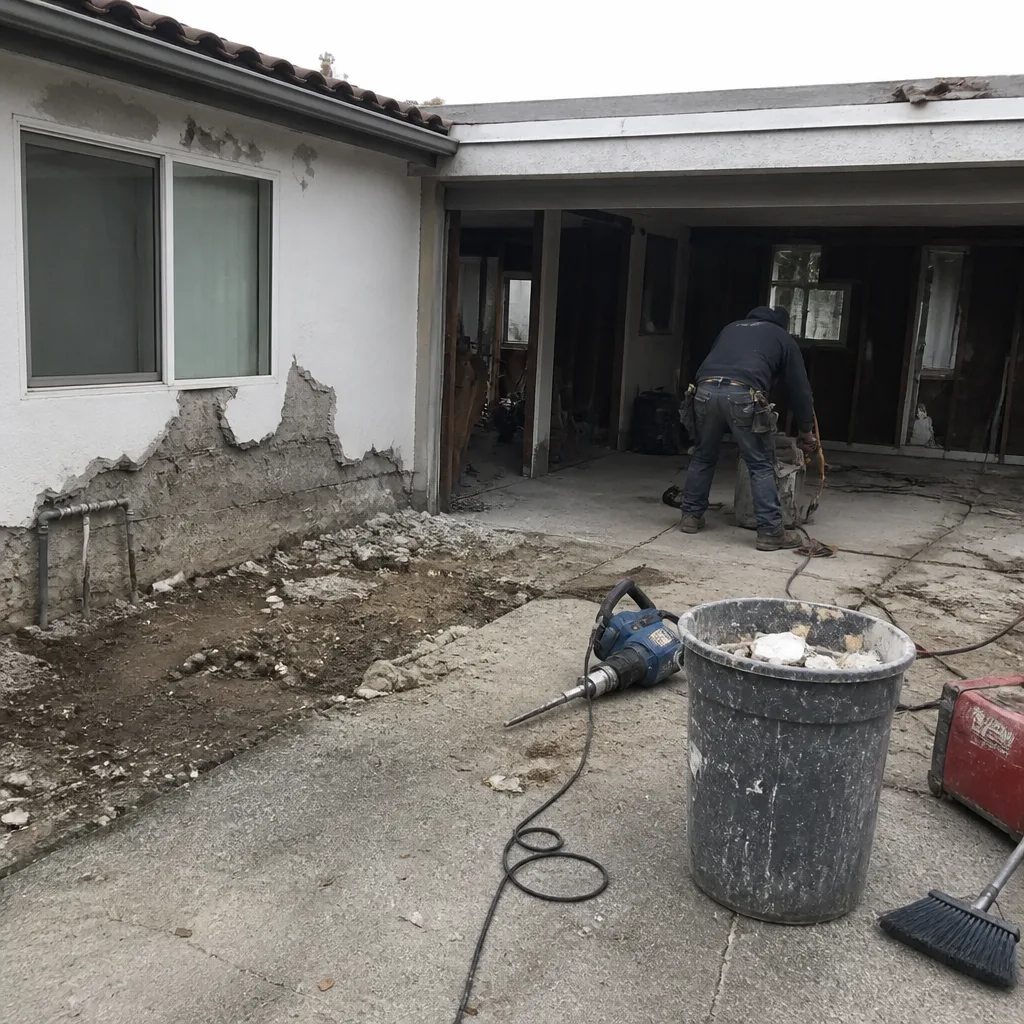 Before
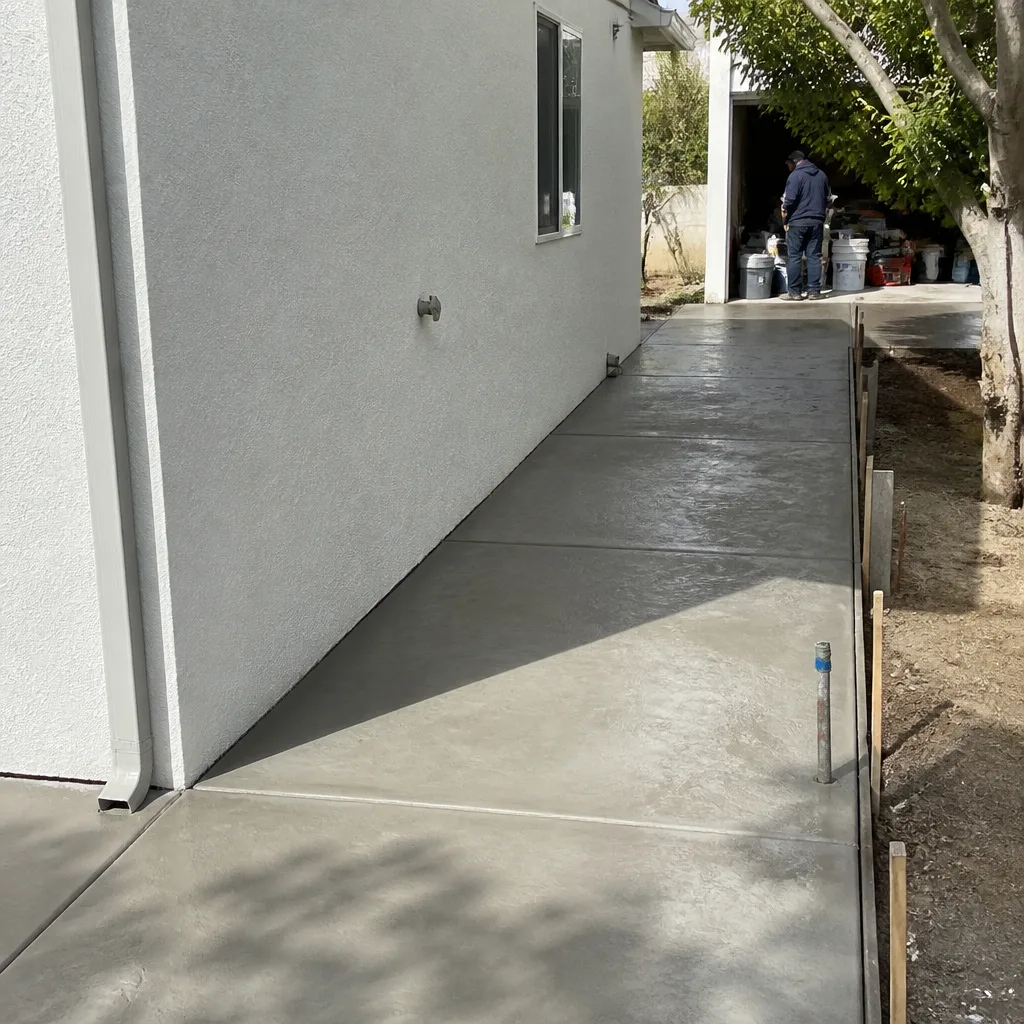 After
After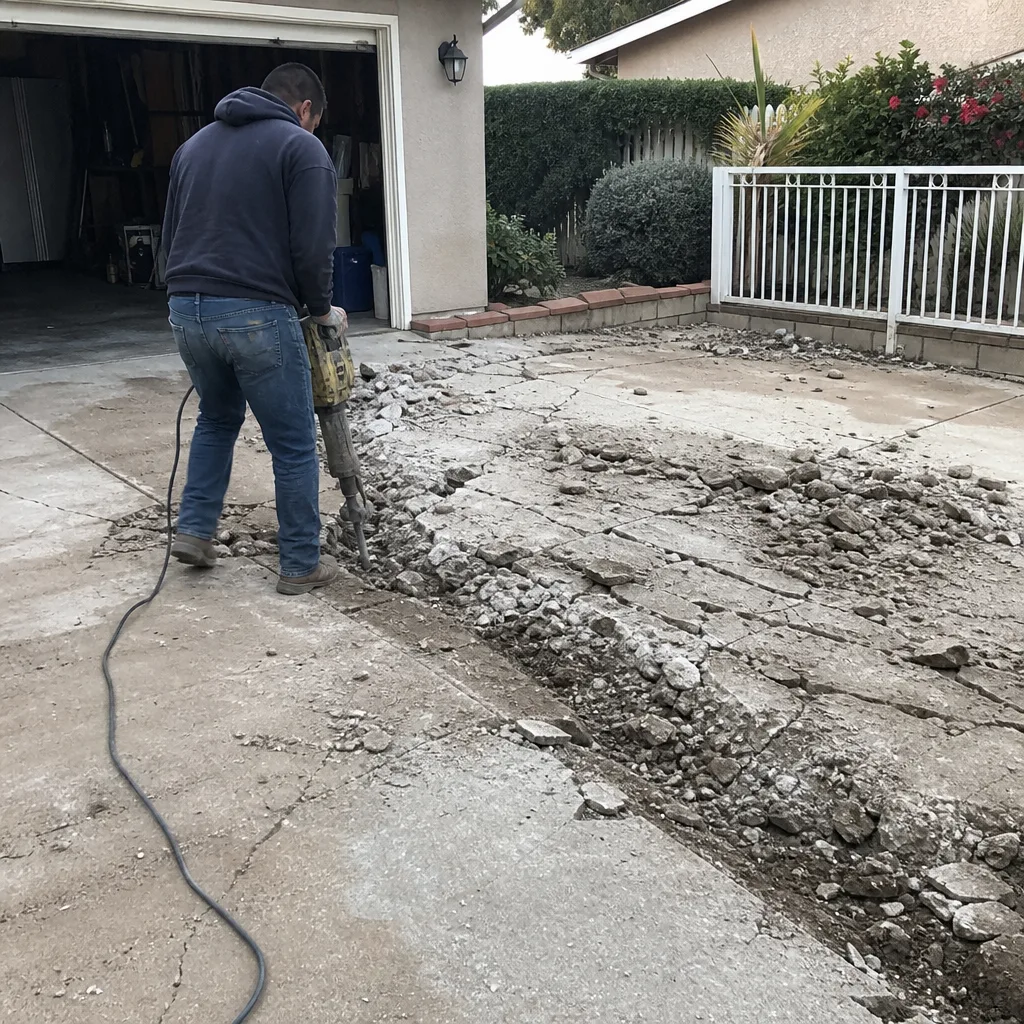 Before
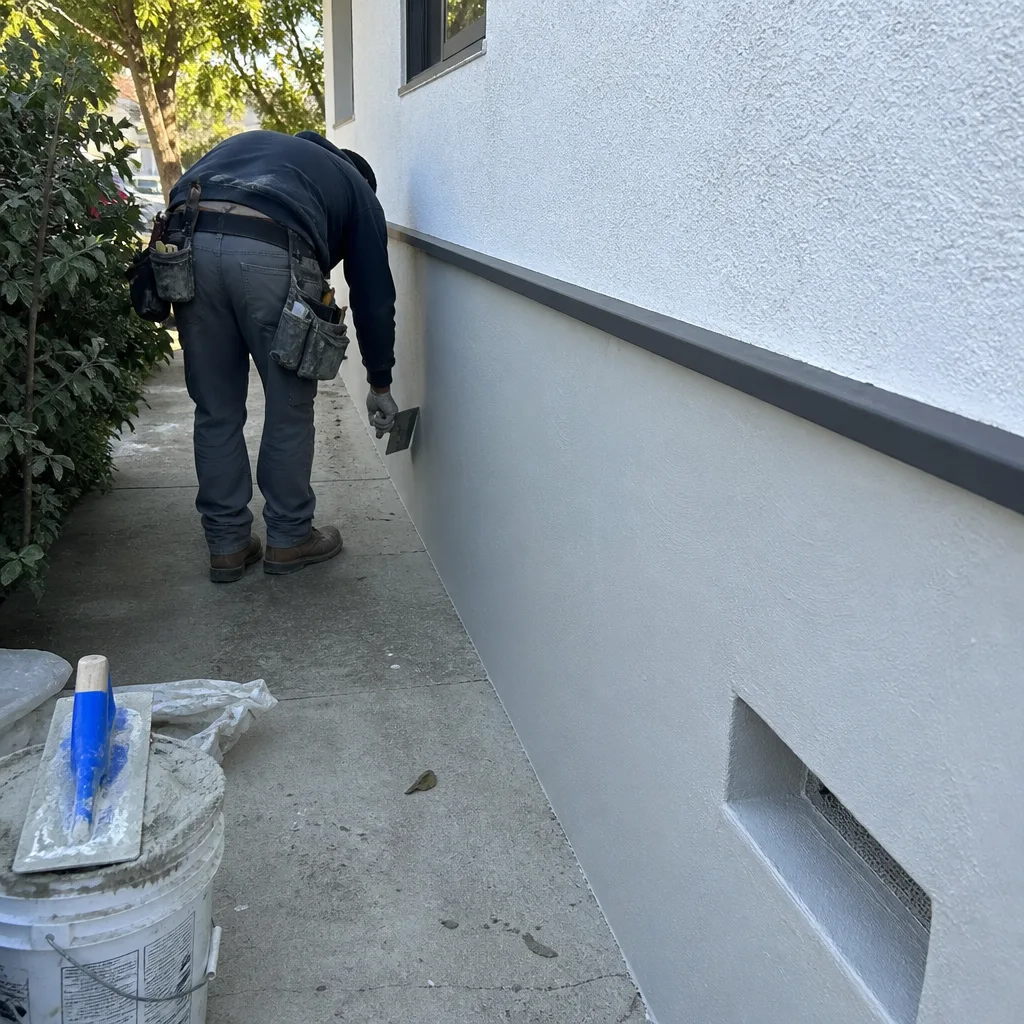 After
After