Last updated October 15, 2026








Free written scope consultation - allowances, timeline, and change-order rules on paper before a single trade is scheduled
How to Hire a Construction Contractor in Ventura: A Step-by-Step Guide
California’s Contractors State License Board processed over 19,000 complaints in a recent year, and the majority involved disputes over what the contract actually said, not whether the contractor held a license. That tells you something important about hiring a contractor in Ventura: the danger usually isn’t a fly-by-night operator with no paperwork. It’s a legitimate business where the paperwork was too thin. Both sides thought they understood the scope. Neither side wrote it down. This guide walks you through the documents you should have in hand before any work begins, what to check on each one, and the questions that surface once the crew is in your living room. For more guides & resources on navigating the remodeling process, see our blog. We’ve seen hundreds of Ventura remodeling projects go smoothly, and the ones that don’t almost always trace back to a verbal agreement that should have been a written one.
Quick Answer
Hiring a construction contractor in Ventura starts with three documents: a verified CSLB license, a written contract with itemized line items, and a workmanship warranty that names specific defects and a filing process. Ask for a fixed written price before any work begins, confirm the contractor carries workers’ comp, and walk through the daily site management plan before you sign. Then get everything in writing, including what “included” means.
Styles & brands we work with
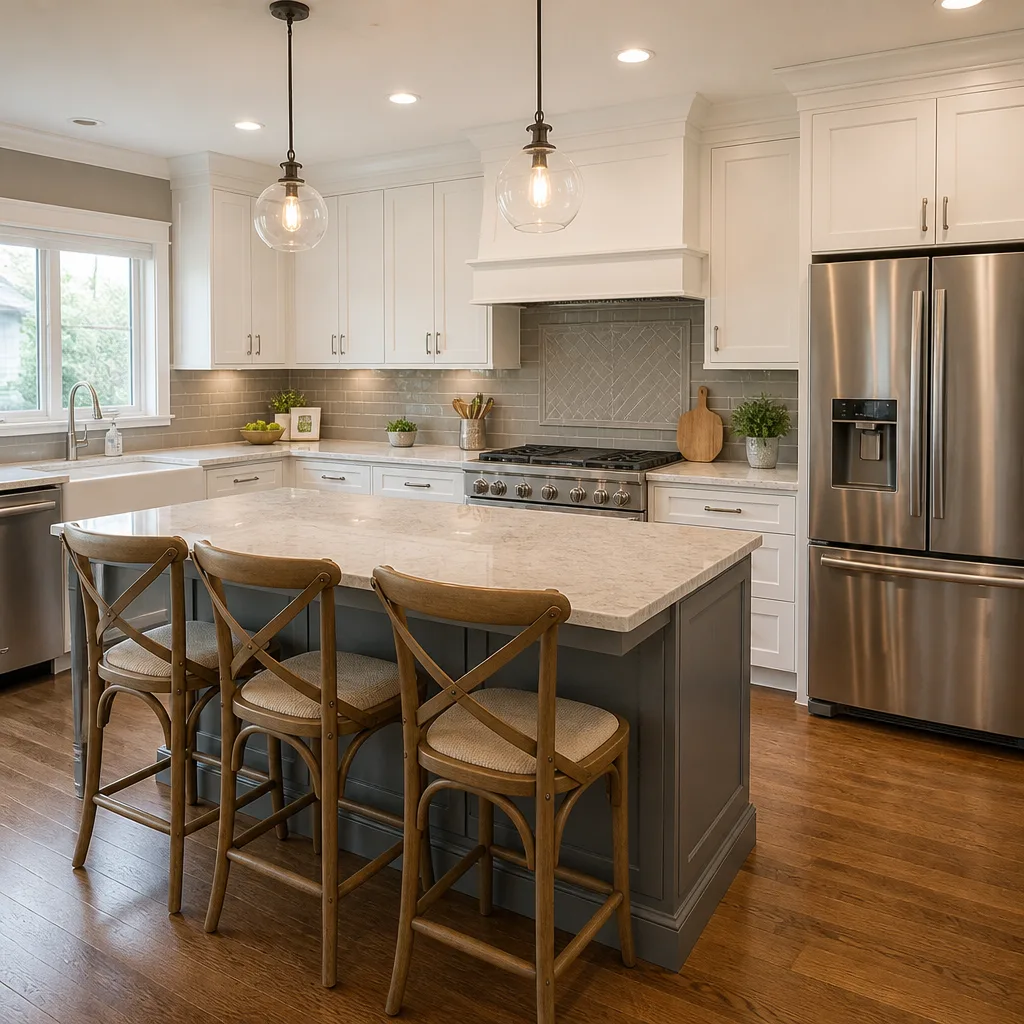
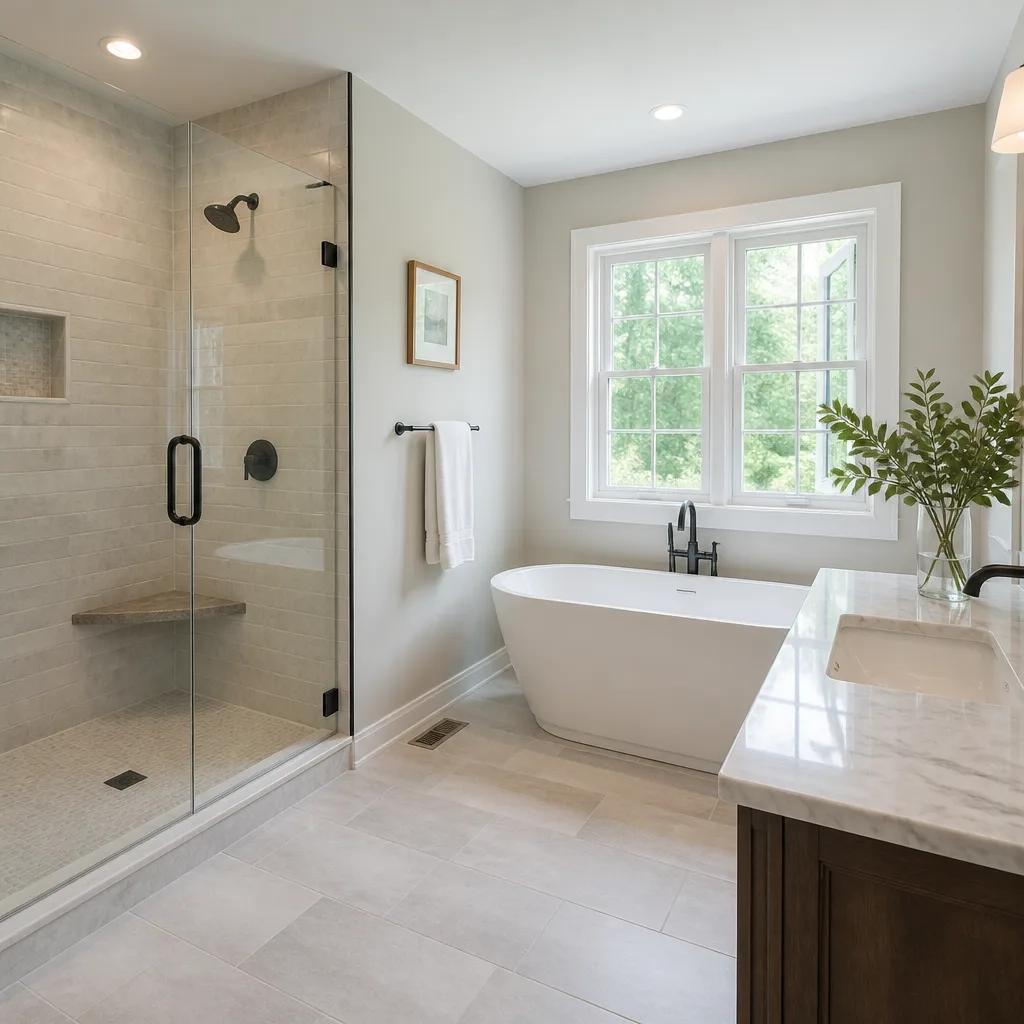
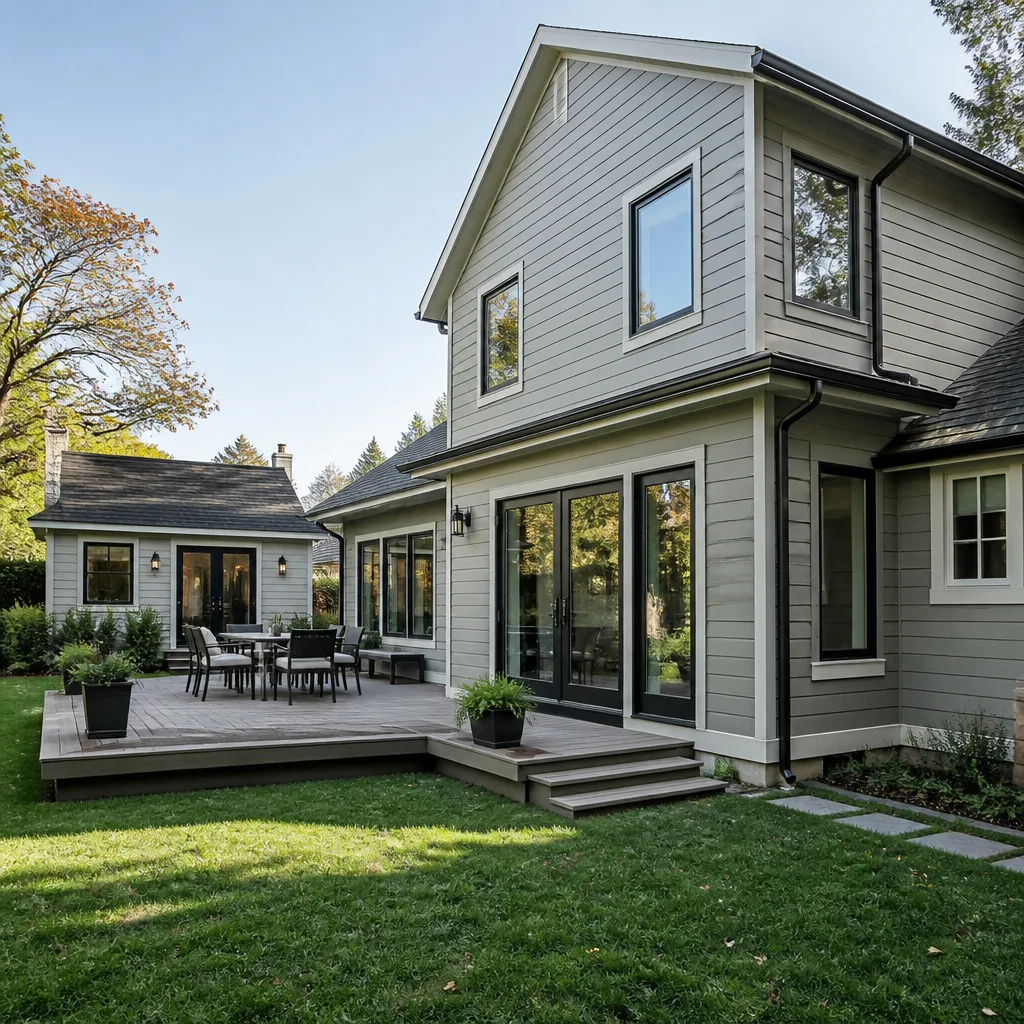


Table of Contents
- Step 1: Verify the CSLB License, Bond, and Workers’ Comp in Under 10 Minutes
- Step 2: The Five Line Items Every California Construction Contract Must Include
- Step 3: Why “Ballpark Estimates” Are a Liability and What a Fixed Written Price Protects Against
- Step 4: Questions to Ask About Daily Site Management, Dust, Quiet Hours, and Pet Safety
- Step 5: What a Workmanship Warranty Should Actually Name
- Step 6: Vetting Contractors in Ventura: Interviews, References, and Red Flags
- Step 7: Ventura-Specific Considerations: Coastal Climate, Permits, and Local Building Codes
Step 1: Verify the CSLB License, Bond, and Workers’ Comp in Under 10 Minutes
Every contractor doing work over $500 in California must hold a license from the Contractors State License Board, or CSLB. That applies to Ventura the same as anywhere else in the state. The check itself takes less than ten minutes, and it’s the single most effective filter you have against hiring someone who shouldn’t be on your property.
Here’s the exact process:
- Go to the CSLB website at cslb.ca.gov and click “Check a License” on the homepage.
- Enter the contractor’s license number. If you don’t have the number, you can search by business name or the individual’s name.
- Look at the license status. It should say “Active” and not “Suspended,” “Revoked,” or “Expired.”
- Check the classification. For a general remodel, look for “B – General Building Contractor.” For specific trades, look for the relevant classification like “C-54” for tile or “C-36” for plumbing.
- Scroll to the bond information. The CSLB requires a $25,000 contractor bond minimum, but you should confirm the bond is current and hasn’t lapsed.
- Check the workers’ compensation insurance field. If the contractor has employees, they must carry workers’ comp. If the field says “Exempt,” that means they claim to have no employees, which is worth asking about directly if more than one person shows up to work.
- Look at the “Workers’ Comp Expiration Date” and the “Liability Insurance Expiration Date.” Both should be in the future. An expired insurance certificate is a serious red flag.
We tell every Ventura homeowner the same thing: do this check yourself, on your own computer, before you so much as ask for a bid. A contractor who hesitates to give you their license number is giving you an answer either way. At Elmstead Remodeling Ventura, a Cedarwell company, we keep our license, bond, and insurance documents ready to share at the first meeting, because a family shouldn’t have to ask twice.
One more note for Ventura specifically: the CSLB license check will also show you if there are any “Disciplinary Actions” or “Consumer Complaints” on file. Read those. A contractor with a history of abandoning a project or overcharging is exactly the kind of information this database exists to surface.
Step 2: The Five Line Items Every California Construction Contract Must Include
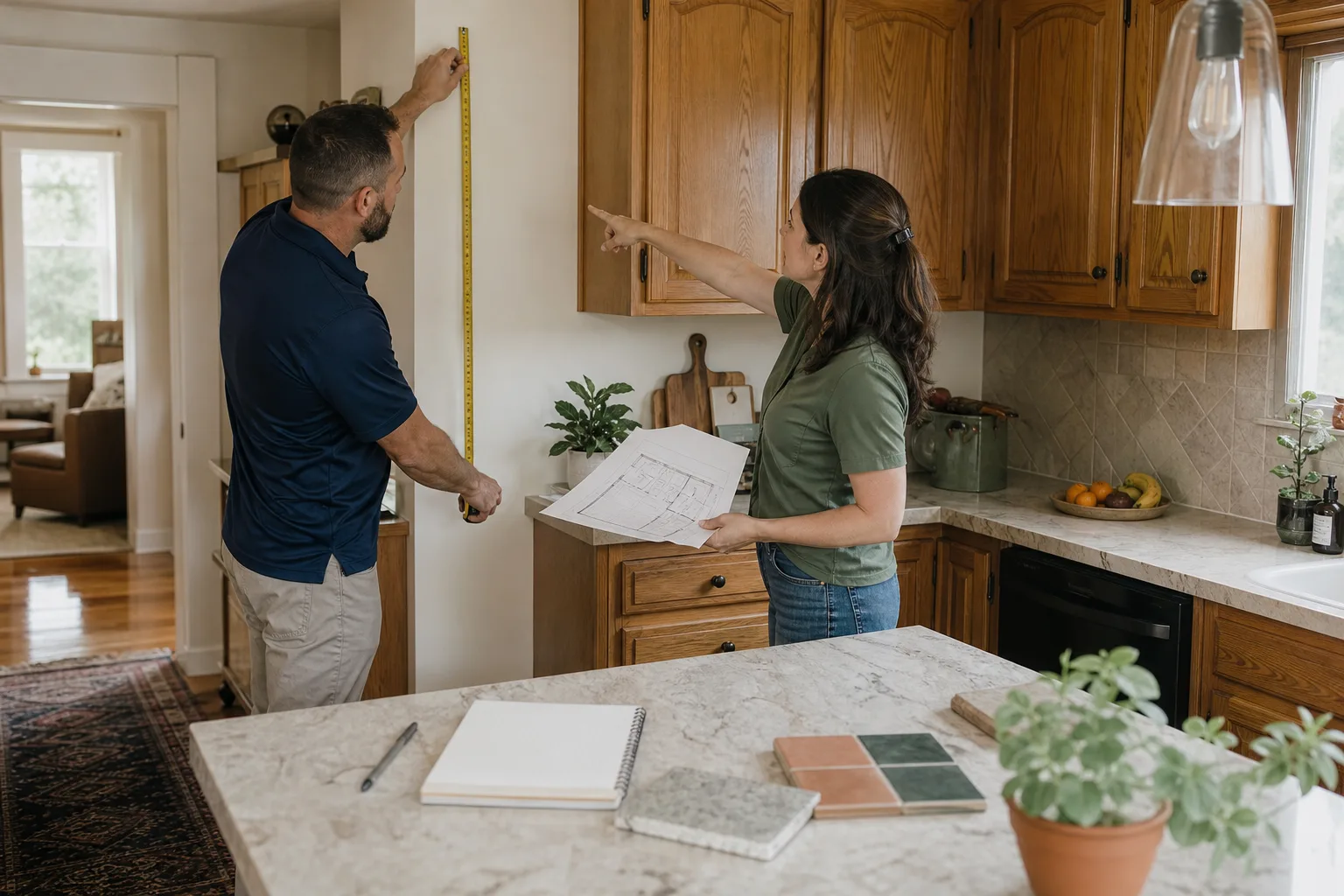
California law is specific about what makes a construction contract enforceable. Getting these five items in writing isn’t a legal formality. It’s the difference between a project that stays on track and a dispute where neither party can prove what was agreed to. Ask for these before you sign anything.
- The contractor’s name, license number, and business address. This must match the CSLB record exactly. If the license number on the contract doesn’t pull up an active license for the same business name, do not sign.
- A detailed description of the work. This means the specific rooms, the specific materials, the specific fixtures. “Remodel master bathroom” is not a description. “Remove existing tub and tile, install new Schluter waterproofing membrane, install new freestanding tub, install new tile to the ceiling, install new Kohler Purist fixtures” is a description.
- A payment schedule. California caps the down payment at 10% of the total contract price or $1,000, whichever is less. After that, payments should be tied to completion milestones, not to dates. Never agree to pay for work that hasn’t been done yet.
- An approximate start date and completion date. “Approximate” matters because permits, weather, and material availability can shift a schedule. But the contract should name a window, not leave the timeline completely open.
- Change order procedures. This is the part most contracts skip. A good contract explains exactly what happens when you want to add a new faucet or the crew discovers rot behind the wall. It should state that any change to scope or price requires a written change order signed by both parties before the work proceeds. No verbal changes, no surprise invoices at the end.
On every project we do through Elmstead Remodeling Ventura, a written price is given before any work starts. Always. Not an estimate that grows after the crew arrives. Not a range that tightens as the project unfolds. A line-item price in writing. That’s the standard a Ventura homeowner should hold every contractor to, and it’s the standard we hold ourselves to, because it’s the only way a family can plan a remodel without dreading the final invoice.
Step 3: Why “Ballpark Estimates” Are a Liability and What a Fixed Written Price Protects Against
The phrase “ballpark estimate” should make you pause. An estimate is not a price. An estimate is a guess. And in construction, a guess becomes expensive quickly.
Here’s what a vague verbal estimate leaves open, and what a fixed written price closes off:
- Scope creep. Without a written scope, “add a second sink” or “extend the tile a few inches” gets treated as a small favor during the work, then appears as a large line item on the final invoice. A written scope means any addition requires a signed change order with its own price, agreed to before the work happens.
- Change-order inflation. When a change order isn’t governed by a contract, the contractor can name any price they want for the addition. When change orders are written and priced against the original scope, the math is visible.
- End-of-project surprises. The most common version of this story in Ventura: a homeowner agrees to a “rough estimate” for a kitchen remodel, the project runs long, and the contractor hands over a bill 30% higher than the original number. The contractor points to things that “came up.” The homeowner points to the original estimate. Without a written price and a change-order process, that argument has no resolution.
A fixed written price doesn’t mean a contractor can’t discover hidden problems. Old Ventura homes, especially those built before the 1980s, often have water damage behind walls or outdated electrical that wasn’t visible at the bid stage. A good contract handles this honestly: the contractor pauses work, photographs the problem, and presents a written change order for the repair. The homeowner sees the issue and the cost before agreeing. That’s how a fixed price protects you while still dealing with reality.
We’ve written about this at length on our General Contractor in Ventura page. The short version: if a contractor won’t put a price in writing, treat it as a disclosure, not a preference.
Step 4: Questions to Ask About Daily Site Management, Dust, Quiet Hours, and Pet Safety
Most hiring guides stop at licensing and contracts. But a family with children and pets needs answers to a second set of questions: what happens between the hours of 8 a.m. and 5 p.m. while the crew is actually inside the house. These answers should be in writing, too.
Here are the specific questions to ask in Ventura, and the answers to look for:
Dust and Floor Protection
Ask: “What exactly will you do to keep dust out of the rest of the house?” The answer should name specific materials and actions. Hard floor runners in the work zone. Plastic sheeting at the doorways. Drop cloths on the floors that the crew walks across to reach the job. If the contractor says “we’ll be careful,” that’s not a plan. A plan names the products.
At Elmstead Remodeling Ventura, shoe covers and drop cloths are included on every visit, on every job, not billed as an add-on. We also take a photo of the clean-up before the crew leaves each day and send it to you as proof the home was left right.
Quiet Hours
Ask: “Can we agree on quiet hours during nap time or school hours?” Most contractors can adjust the noisiest tasks like demolition or tile cutting around a toddler’s nap schedule, within reason. If the contractor waves this off, they’re telling you something about how they’ll treat the daily life of your family. Our crews use quiet tools during family rest hours where possible, because a child’s sleep schedule isn’t an inconvenience. It’s part of the job.
Material Storage and Daily Cleanup
Ask: “Where will materials be stored, and what does end-of-day cleanup look like?” Lumber and tile stacked against a fence can damage a lawn or obstruct a walkway. Ask where the crew plans to stage materials, and agree on a cleanup standard for the end of each work day, not just the end of the project.
Pets and Children
Ask: “How do you handle pets on site?” A good contractor asks where pets will be during active work and keeps exterior gates closed. Ask about product choices: “Can we use low-VOC paint and pet-safe cleaning products where there’s a choice?” The answer should be yes where available, not a shrug.
The C.A.R.E. values we work under name these things directly: Clean up like it’s our own home. Ask before we move or touch anything. Respect the family’s time and quiet hours. Explain the price before the work. Any contractor you hire in Ventura should be able to tell you what their version of these values look like in practice.
Step 5: What a Workmanship Warranty Should Actually Name
“Satisfaction guaranteed” is not a warranty. It’s a slogan. A workmanship warranty should name three things, in writing:
- The duration. How long does the warranty last from the date of substantial completion? One year is the bare minimum in California. Longer is better, and the best contractors put something longer in writing.
- The covered defects. What specifically is covered? Grout that cracks? Cabinets that delaminate? Tile that comes loose? Paint that peels? A real warranty names the types of defects it covers, so there’s no argument later about whether a problem “counts.”
- The filing process. How do you actually make a claim? Who do you call? What’s the timeline for a response? A warranty without a process is a promise with no mechanism.
Ask the contractor to show you their written warranty before you sign. Read it. If it says “we’ll come back if there’s a problem” but doesn’t specify what counts as a problem or how long the offer stands, ask for more detail.
Our own standard is the 365-Day Done Right Promise: if it’s not done right after the job is complete, we make it right. That’s stamped on every project we complete in Ventura. It’s the longest-standing post-project commitment in our service area, and it’s long in the way that matters: after the final check clears, not before.
You can read more about how we handle the full scope of a project on our Elmstead Remodeling Ventura home page.
Step 6: Vetting Contractors in Ventura: Interviews, References, and Red Flags
Checking the license and the contract gets you a contractor who is legally allowed to work. But it doesn’t tell you whether they’re the right contractor for your family. The final screening layer is the interview.
Questions to Ask During the Interview
- “Who will be on site each day, and who is the project lead I can call with questions?” You want a named person, not a rotating cast of subcontractors with no clear point of contact.
- “How do you handle communication during the project?” Will you get a weekly update? A daily text? A call from someone live when you have a question? At Elmstead Remodeling Ventura, there’s a live person answering the phone 24/7, not a voicemail box, not an automated system, not a next-business-day callback.
- “Have you done projects in this neighborhood of Ventura?” A contractor who has worked on homes in your area understands the permitting office, the inspectors, and the common issues in houses built in a certain era.
- “Can I speak with two previous clients from the past six months?” Actually make the calls. Ask the previous client whether the price changed, whether the crew cleaned up daily, and whether the contractor answered calls during the project.
Red Flags to Watch For
- Pressure to sign before you’ve checked the license or gotten a second bid. A confident contractor doesn’t need a deadline.
- A price given without seeing the house. No one can accurately price a remodel from a description. A contractor who gives a firm number before walking the property is guessing or lowballing.
- No change-order process in the contract. This is the most common way projects spiral, and it’s entirely avoidable with a written contract that spells out the process.
- Hesitation to provide the license number. If the number isn’t volunteered at the first meeting, check it before the second.
- A warranty that’s described but never provided in writing. If you can’t read it, it doesn’t exist.
Step 7: Ventura-Specific Considerations: Coastal Climate, Permits, and Local Building Codes
Ventura’s location shapes every remodeling project here in ways a contractor from another region might not anticipate. Three specifics matter for any family hiring a contractor in Ventura. For a deeper look at protecting your investment year-round, read our Seasonal Construction Care for Ventura: Year-Round Homeowner’s Guide.
Coastal Moisture and Material Selection
Homes within a few miles of the Pacific deal with salt air and persistent moisture. That means material selection needs to account for corrosion and moisture exposure. Hardware and fixtures should be chosen for resistance to salt air. Exterior siding, in particular, needs to be rated for coastal exposure. We work with James Hardie products for exactly this reason: they hold up to coastal conditions better than wood siding, and the manufacturer’s warranty travels with the finished project. Ask your contractor what materials they recommend for a home a mile from the ocean, and listen for a specific answer, not a shrug.
Permits and Local Code
The City of Ventura requires permits for any work that changes the structure, plumbing, electrical, or mechanical systems of a house. That includes most kitchen and bathroom remodels. A contractor who suggests “we can skip the permit to save time and money” is asking you to accept liability for work that may not meet code, may complicate a future sale, and may violate your homeowners insurance policy. Any reputable contractor in Ventura will pull permits, schedule inspections, and view the inspection as a checkpoint, not an obstacle. Ask directly: “Will you pull the permits and handle the inspections?” The answer should be yes without hesitation.
Older Housing Stock
Many Ventura homes were built between the 1950s and 1970s, which means galvanized plumbing, outdated electrical panels, and wall construction that lacks modern insulation. A contractor who has worked in Midtown Ventura or the College Area understands these homes. A contractor who hasn’t may be surprised when the wall opens up. The surprise becomes a change order, and the change order becomes a cost you didn’t plan for. Ask the contractor specifically whether they’ve worked on homes of your house’s era in Ventura, and what they typically find behind the walls. For a full overview of the local building landscape, see The Complete Guide to Construction in Ventura.
You can see how all of these pieces come together on a real project by reading about our Bathroom Remodeling in Ventura and Kitchen Remodeling in Ventura work.
Common Mistakes to Avoid
- Skipping the CSLB worker’s comp check. If a contractor has employees but no workers’ comp insurance, and a worker gets injured on your Ventura property, the liability can fall to you. Check the field on the CSLB record every time.
- Accepting a verbal scope of work. “We’ll replace the tub and tile” is a conversation, not a contract. The written scope is the document that settles disputes.
- Paying too much up front. California law caps down payments at 10% or $1,000. Paying more than that before work begins is both unnecessary and a violation of state law.
- Not asking about daily cleanup before the crew arrives. Dust travels. A contractor who doesn’t have a dust-containment plan will leave a fine layer of construction dust on every surface in the house.
- Confusing a brand-name product with a brand-name installation. Buying Kohler fixtures matters, but how they’re installed matters more. The fixture is only as good as the waterproofing behind it.
- Signing a contract without a change-order clause. This is the single most common cause of project cost overruns, and it’s preventable with a contract that requires written change orders before any additional work proceeds.
- Hiring on price alone. The cheapest bid in Ventura is often from the contractor who hasn’t included the full scope. The final price rarely comes in under the higher bid.
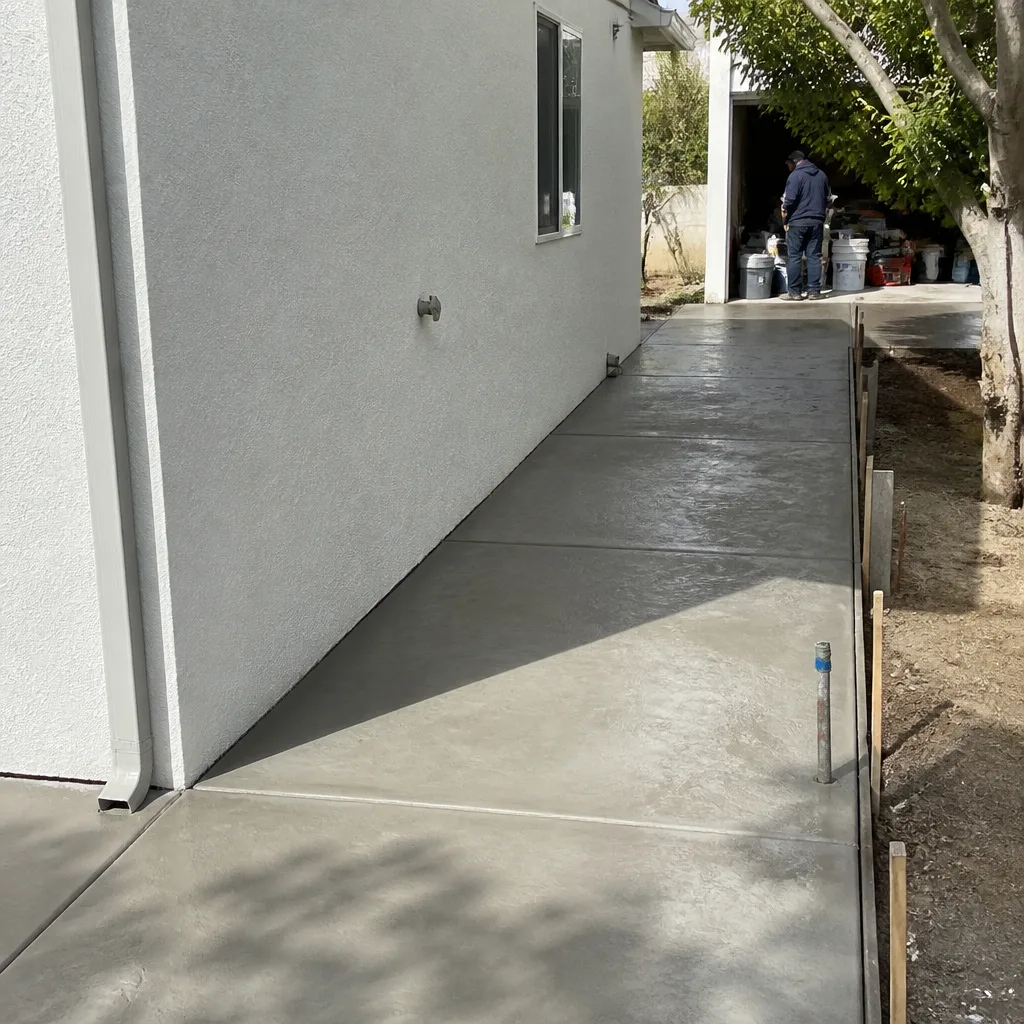
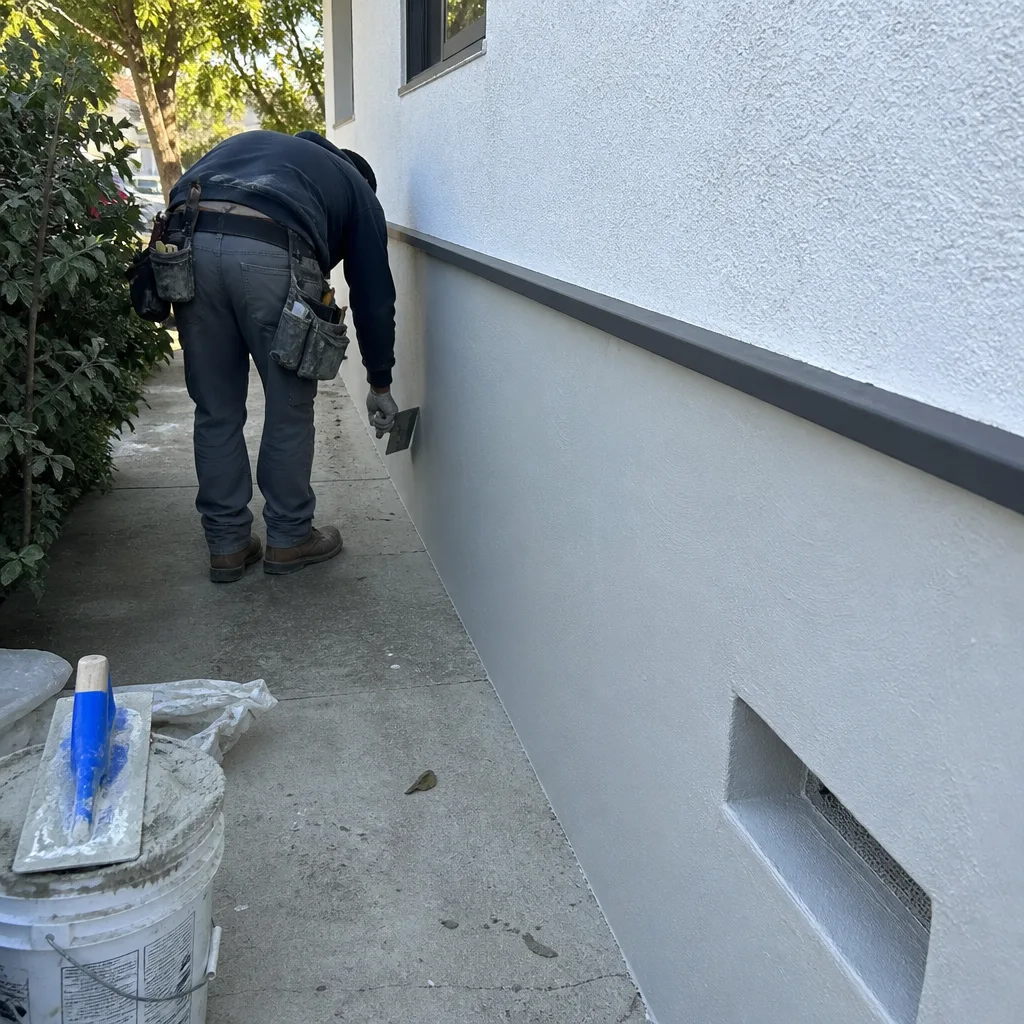
See the difference
 Before
 After
After Before
 After
After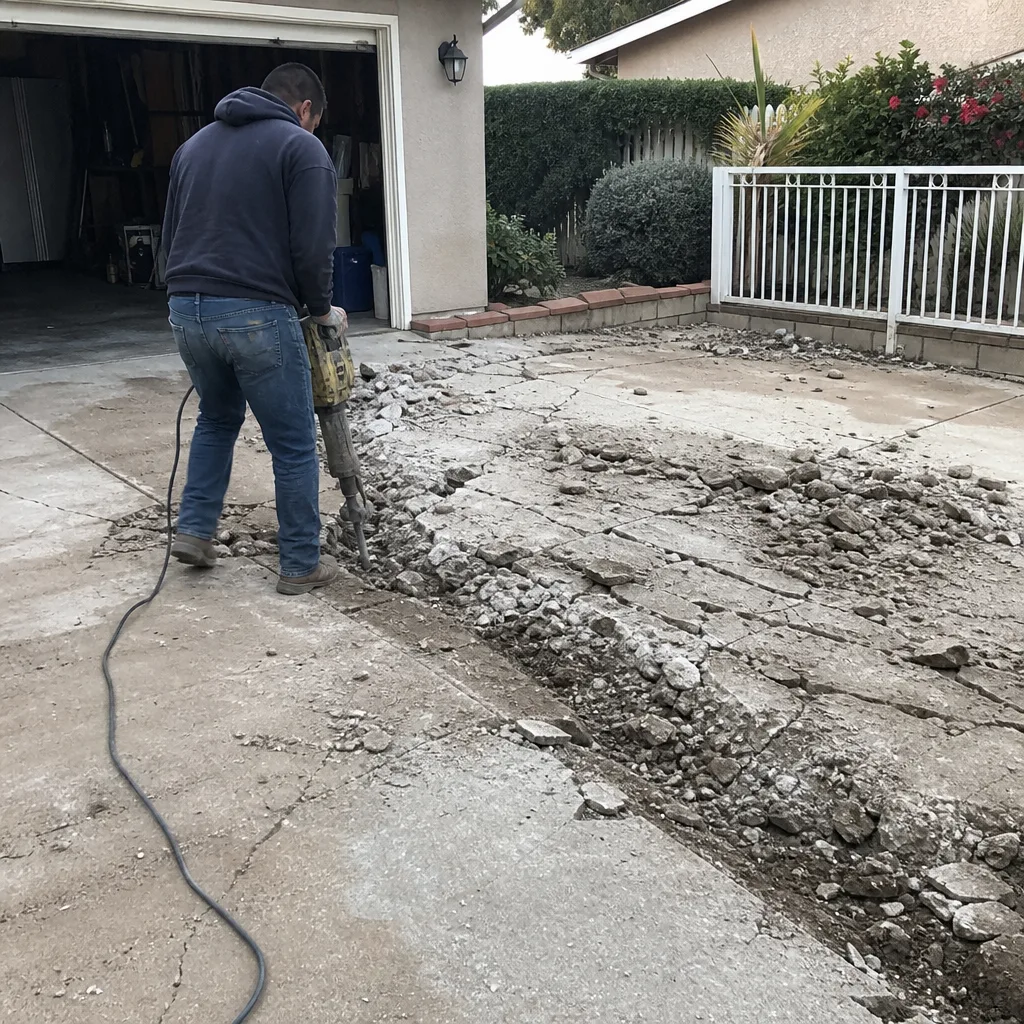 Before
 After
AfterWhen to Call a Professional
If you’re planning a remodel that involves structural changes, plumbing, electrical work, or anything behind the walls, call a licensed contractor before you make any permanent decisions. The cost of a professional estimate is zero, and it’s the fastest way to learn what the project will actually require, what the permits will involve, and what a realistic budget looks like for your specific Ventura home. Elmstead Remodeling Ventura offers free estimates in Ventura. Call (341) 218-4316 and you’ll speak with a live person who can walk through your project and get a written price before any work starts.
Frequently Asked Questions

A mid-range kitchen remodel in Ventura typically runs between $45,000 and $85,000, while a full high-end remodel with custom cabinets and premium countertops can reach $120,000 or more. The final number depends on the size of the kitchen, the materials you select, and whether walls or plumbing are moving. Cabinets from KraftMaid and Wellborn, countertops from Cambria or Silestone, and fixtures from Kohler or Moen all carry manufacturer warranties that travel with the finished project. Call (341) 218-4316 for an exact quote, and you’ll get a written price before any work starts.
Go to cslb.ca.gov, click “Check a License,” and enter the contractor’s license number. Confirm the status is Active, check the classification matches the work you need, verify the bond is current, and look at the workers’ comp insurance expiration date. The entire check takes under ten minutes and it should be done before you request a bid.
A full bathroom remodel in Ventura typically takes three to six weeks, depending on the scope of demolition, whether plumbing is being relocated, and how quickly materials arrive. For detailed pricing expectations, see our Construction Cost Breakdown: The Ventura Homeowner’s Reference for 2026. Permitting through the City of Ventura can add one to two weeks on the front end. Your written contract should name an approximate start and completion window, and the schedule should be updated in writing if it shifts.
It shouldn’t, if the contract includes a written price and a change-order process. The only legitimate reason for a price change is a hidden condition that couldn’t be seen at the bid stage, like water damage behind a wall or outdated electrical. In that case, the contractor should stop work, show you the issue, and present a written change order with a specific price before proceeding. Any change without a signed change order is a red flag. Call (341) 218-4316 to talk through your specific project.
An estimate is a range based on what the contractor can see before demolition. A written price is a specific number the contractor commits to before any work begins. The difference matters at the end of the project, when a single number is due. Elmstead Remodeling Ventura gives a written price before any work starts, every time, on every project.
Yes, for any work that changes the structure, plumbing, electrical, or mechanical systems of your home. That includes most kitchen and bathroom remodels, additions, and any work that opens a wall. The City of Ventura requires permits, and a reputable contractor will pull them, schedule inspections, and treat the inspection as a checkpoint rather than an obstacle.
The Bottom Line
Hiring a contractor in Ventura comes down to paper. Verify the license on the CSLB website. Read the written contract and confirm the five line items are present. Ask a written price before any work begins, and hold to it. Walk through the daily site management plan: the dust containment, the quiet hours, the pet safety, and the end-of-day cleanup. Read the warranty and confirm it names a duration, covered defects, and a filing process. Then choose the contractor who answers each question with a specific, written answer. The families who do this end up with the remodeling experience they wanted. The families who don’t end up in the CSLB complaint statistics.
Written by Graham Stein, Owner at Elmstead Remodeling Ventura, serving Ventura since 2005.