Last updated October 15, 2026








Free written scope consultation - allowances, timeline, and change-order rules on paper before a single trade is scheduled
Construction Warning Signs: A Ventura Homeowner’s Reference Guide
A freshly painted wall can hide a wall that was never primed, improperly patched, or skipped entirely on moisture testing, and you won’t know until the paint bubbles six months later. That is the uncomfortable truth about construction in Ventura, where salty coastal air and steep hillside lots punish shortcuts faster than almost anywhere else in Southern California. Most contractor red flag articles focus on attitude and promises, the smooth sales pitch or the vague contract language. This guide is different. It focuses on observable, physical evidence: the specific things you should see and not see on a job site, in a contract, and in a finished room that tell you whether the work was done to standard before you make your final payment. For a broader look at how to evaluate your options, see our DIY vs Professional Construction: The Ventura Homeowner’s Decision Guide. By the time you finish reading, you will know how to inspect a Ventura job site like someone who has seen what goes wrong when no one is looking.
Quick Answer
The most reliable construction warning signs in Ventura are physical, not verbal: no posted building permit before work begins, no dust barrier separating the work zone from living areas, drywall screws driven too deep, inconsistent tile grout lines, and a contract that front-loads payment beyond California’s legal 10%-or-$1,000 deposit cap. Any one of these should stop the project for a documented conversation before another dollar changes hands.
Styles & brands we work with







Table of Contents
- On-Site Warning Signs Before Work Starts
- Mid-Project Warning Signs You Can See With Your Own Eyes
- Contract Warning Signs That Predict Trouble
- Finished-Work Warning Signs in Kitchens and Bathrooms
- What to Do If You Spot a Warning Sign Mid-Project
- Ventura-Specific Warning Signs Most Guides Miss
- How to Document What You See: A Step-by-Step Record
- Common Mistakes to Avoid
- When to Call a Professional
- Frequently Asked Questions
On-Site Warning Signs Before Work Starts
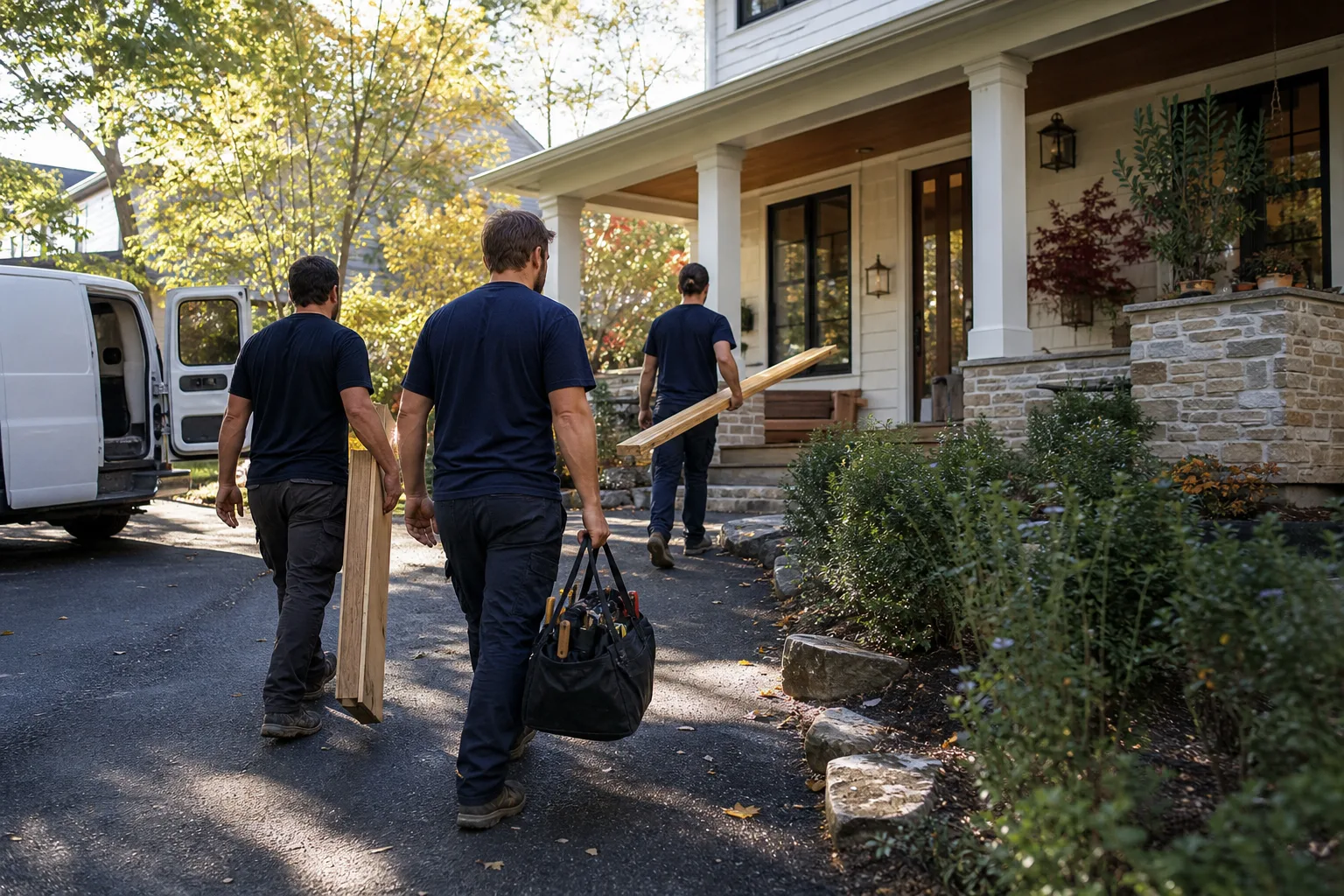
Walk the job site before the first hammer swings. In Ventura, where many homes sit on hillsides or within older neighborhoods like Midtown and College Area, the condition of the site on day one tells you more about the crew’s habits than any sales presentation ever could. A crew that starts sloppy rarely finishes clean.
Here are the physical signs to look for:
- No posted permit. In Ventura, building permits must be posted visibly on the property, typically in a window facing the street or near the front door. If work requiring a permit has started and there is no permit posted, stop the project and ask for the permit number. Ventura’s Building and Safety Division requires permits for most structural, electrical, plumbing, and mechanical work. A contractor who skips the permit is asking you to carry the liability.
- Building materials sitting directly on the lawn or bare soil. Lumber, drywall, and tile stored directly on grass or dirt absorb moisture from the ground. In Ventura’s marine layer mornings, that moisture sits for hours. Wood that absorbs ground moisture warps, and drywall that sits on damp soil wicks water up its edge. Quality crews bring pallets or at minimum 2×4 spacers to keep materials off the ground.
- No dust barrier at the work zone threshold. If a wall is coming down or drywall is being cut, there should be a plastic sheeting barrier separating the work area from the rest of the house. A crew that skips the barrier is telling you they accept construction dust in your kitchen, your children’s bedrooms, and your HVAC system. In our experience, the crews that protect the threshold are the crews that protect everything else.
- Open beverage containers or food waste on site. This sounds minor, but it is a discipline indicator. A crew that leaves energy drink cans and sandwich wrappers scattered around the work zone is a crew that does not have a clean-up protocol. That same absence of protocol shows up later in grout work, caulk lines, and paint masking.
- No portable restroom or agreed-upon restroom plan. If a crew is on site for more than a day, there needs to be a restroom plan. In Ventura, where many remodels happen in occupied homes, this is a conversation that should happen before work starts. A contractor who has not thought about this detail has not thought about many other details.
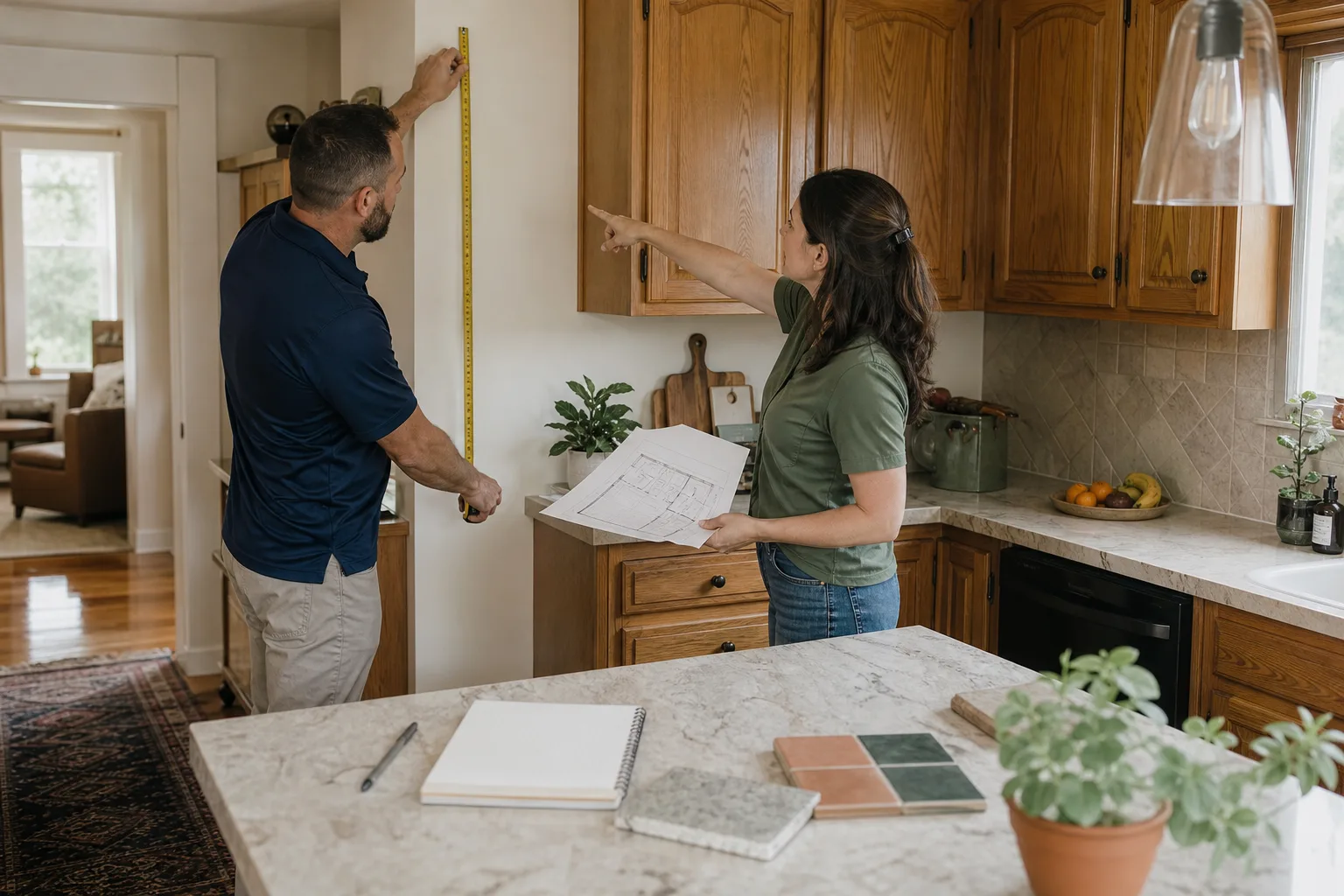
Before any remodeling begins on your Ventura home, ask to see the permit and walk the site with the lead carpenter. If they hesitate or deflect, that hesitation is itself a warning sign. Many of the families we work with through our general contracting work in Ventura tell us they never realized how much they could learn from a five-minute walk before the work begins.
Mid-Project Warning Signs You Can See With Your Own Eyes
You do not need to be a contractor to spot mid-project warning signs. You need to know what properly installed building materials look like, because the difference is visible to a careful observer. Here are the most common physical indicators that work is being rushed or done below standard.
Drywall Screws Dimpled Too Deep
Lay a straight edge or a level across a finished drywall seam. The joint compound should be flat or nearly flat. If you see visible divots or craters where screws were driven, the drywall installer set the screws too deep and tore the paper face of the drywall. That screw now has significantly less holding power. What you are seeing is not a cosmetic issue; it is a fastener that has begun to fail. A proper Drywall finish shows no screw heads at all, just a smooth, continuous surface.
Tile Grout Lines That Waver
Stand at the end of a tiled wall or floor and sight down the grout line. In a properly installed tile field, grout lines run straight and maintain consistent width. Wavering lines mean the installer did not use spacers consistently or did not snap layout lines before setting tile. Inconsistent grout width is not an aesthetic quirk. It is evidence that the installer was working freehand and rushing. In showers and tub surrounds, inconsistent grout lines often correlate with improper waterproofing underneath, because the same person who skipped layout discipline is the person who skipped waterproofing discipline.
Electrical Work Done Before the Rough Inspection Sign-Off
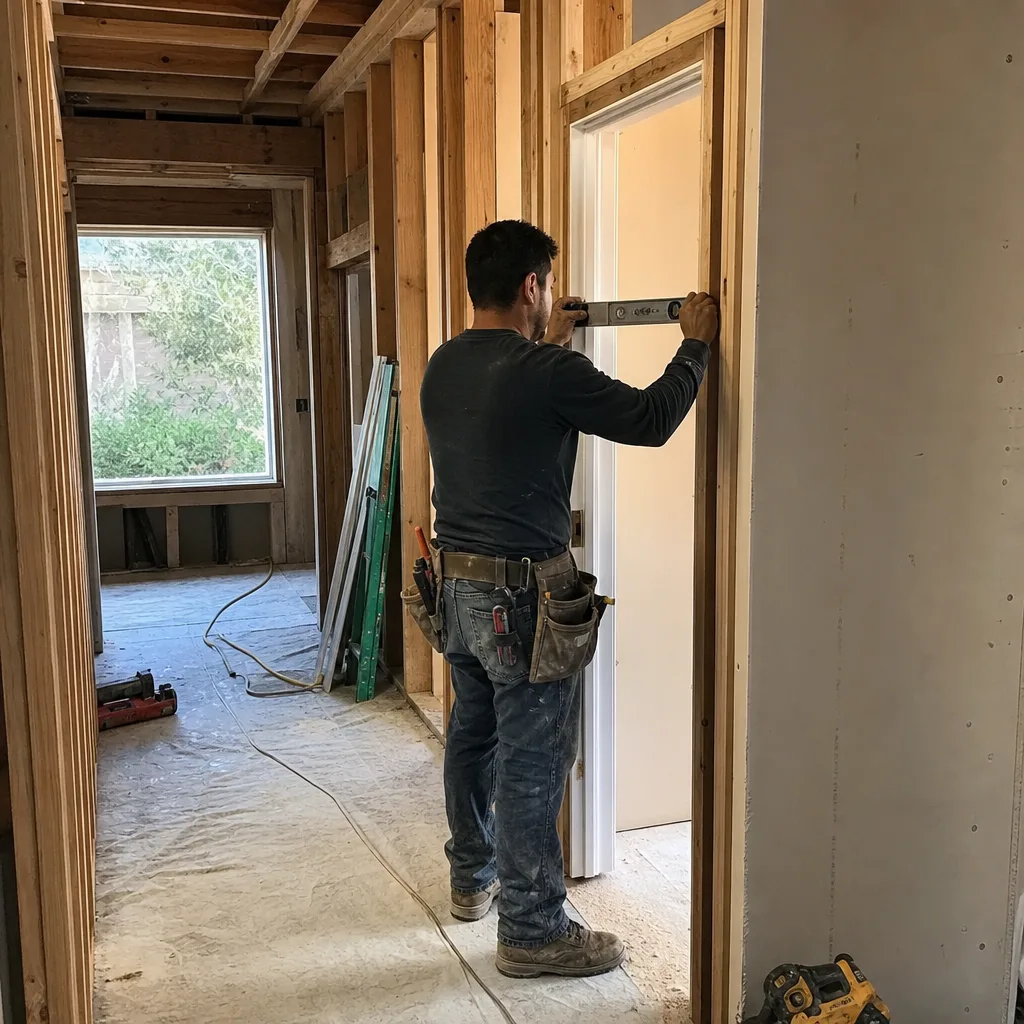
In Ventura, electrical rough-in work must be inspected and signed off before it is covered with drywall. If you see wires running through stud bays and then see drywall being hung the same week, ask whether the rough inspection has passed. A contractor who covers electrical work before inspection is either rushing the schedule or hiding something. Neither is acceptable. The City of Ventura inspection process exists to catch exactly these problems, and the sign-off is your protection as the homeowner.
Plumbing Pipes Not Supported at Regular Intervals
Open wall cavities give you a rare window into the plumbing. Copper and PEX water lines should be supported with clips or straps at regular intervals, typically every 32 to 48 inches depending on pipe size. Pipes sagging between studs or resting on sharp edges will eventually rub, vibrate, and leak. If you see pipes hanging loose, say something before the wall closes.
No Moisture Barrier Behind Cement Board in Wet Areas
In Ventura bathrooms and showers, where humidity is a year-round factor, waterproofing is not optional. Cement board alone is not waterproof. There should be a waterproof membrane, either liquid-applied or sheet membrane, behind the tile in any wet area. If you look into the shower niche or around the tub surround before tile goes up and see bare cement board with no membrane, that is a red flag that will become a leak within a few years.
For families in East Ventura or the hillside neighborhoods, where older homes often have plaster walls and uneven framing, these inspection points matter even more. The work has to account for the house as it actually is, not as the contractor wishes it were. That is a core part of how we approach home remodeling across Ventura.
Contract Warning Signs That Predict Trouble
A construction contract is not a formality. It is the document that governs what happens when everything goes wrong. In California, homeowners have specific legal protections, and a contract that ignores them is a contract written by someone who does not intend to honor them. For help understanding what a complete contract should include, read our General Contractor Maintenance Checklist for Ventura Homeowners.
California’s deposit cap is 10% or $1,000, whichever is less. That is not a suggestion. California Business and Professions Code section 7159 states that a contractor cannot request or accept a down payment larger than $1,000 or 10% of the project price, whichever is less. If your Ventura contractor asks for 20% up front, 30% up front, or any amount above the cap, that is not just a red flag. It is a violation of state law.
Beyond the deposit cap, here are the contract warning signs to look for:
- No start date and no completion date. A contract without a calendar is a contract without commitment. The start date tells you when the contractor is actually planning to show up. The completion date gives you a reference point for delays. In Ventura’s competitive remodeling market, reputable contractors have schedules. Vague language like “work to begin upon availability” should send you elsewhere.
- Payment schedule front-loaded beyond the legal deposit. Even a 10% deposit is too much if the next payment is due before any work has been completed. A reasonable schedule ties payments to completed milestones: rough inspection passed, drywall complete, tile set, final walkthrough. A contractor who wants half the money before the framing is done has no incentive to finish.
- No lien waiver clause. If your contractor does not pay the subcontractors or material suppliers, those parties can file a mechanics lien against your Ventura home, and you can end up paying twice for the same work. A proper contract includes provisions for lien waivers, signed by every subcontractor and supplier before you release final payment. Without this clause, you are carrying the risk.
- Change order terms that are missing or vague. Remodels uncover surprises, especially in Ventura’s older housing stock. A change order is the document that records a change in scope and the price associated with it. If the contract does not specify how change orders are handled in writing, the contractor can claim verbal agreements later and inflate the final bill.
- No dispute resolution clause. When a disagreement happens, how is it resolved? Mediation, arbitration, or litigation? If the contract is silent, you are defaulting to the most expensive option. A written dispute resolution clause protects both parties and keeps a disagreement from becoming a lawsuit.
Before signing anything for a bathroom or kitchen remodel in Ventura, read the payment schedule first. If it is front-loaded, nothing else in the contract matters, because you have already given away your leverage.
Finished-Work Warning Signs in Kitchens and Bathrooms
The final walkthrough is where homeowners either catch the problems or inherit them. In kitchens and bathrooms, where the work is most visible and most expensive, these are the specific finished-work warning signs to look for before you make the final payment.
Cabinet Doors That Do Not Close Flush
Open every cabinet door and drawer. Each door should close flush against the frame with even reveal lines around all four edges. A door that rests proud of the frame on one corner or sags against its neighbor means the hinges were not adjusted properly or the cabinet boxes were not installed level. This is not a minor annoyance; it is a sign that the installer skipped the final adjustment pass. Over time, misaligned doors wear hinges faster and can damage door edges.
Grout Missing at the Tub-Wall Joint
Run your finger along the joint where the tub meets the tile wall. There should be a continuous bead of caulk, not grout, at this transition. Grout is rigid and will crack as the tub flexes under weight and water. Caulk is flexible and stays sealed. In a Ventura bathroom, where shower use is daily and humidity is high, a missing or cracked tub-wall joint is an open invitation for water to reach the wall cavity behind the tile.
GFCI Outlets Absent Within Six Feet of a Water Source
Walk the kitchen and bathroom and look at every outlet. Any outlet within six feet of a sink, tub, or shower must be GFCI-protected under California electrical code. You can identify them by the test and reset buttons on the outlet face. If you see a standard outlet positioned near the kitchen sink or bathroom vanity without GFCI protection, that is a code violation and a safety hazard. This fix is relatively inexpensive, but a contractor who skipped it was not paying attention to code compliance at all.
Exposed Cut Edges on Laminate Countertops
If you upgraded to laminate countertops, inspect the cut edges, especially around the sink opening. The edges should be sealed. Exposed particleboard or MDF edges will absorb water and swell, permanently ruining the countertop. A quality fabricator seals every cut. A rushed one leaves them raw and hopes you won’t notice.
Faucet Supply Lines That Drip or Weep
Wipe the supply lines under the sink dry with a paper towel, then wait five minutes and check again. Any moisture at the connection points means the compression fittings were not tightened correctly or the threads were not sealed. A drip here is a slow leak that will destroy whatever you store in the cabinet below and, over time, the cabinet floor itself.
These finished-work checks apply equally to bathroom remodels throughout Ventura and to kitchens in homes from Montalvo to Pierpont. The point is the same: verify before you pay, because your leverage ends with the final check.
What to Do If You Spot a Warning Sign Mid-Project
If you identify any of the warning signs described above while work is still in progress, do not wait until the end of the project to raise it. Here is a step-by-step process for handling it correctly and protecting yourself under California law. For a detailed walkthrough of finding and vetting the right professional from the start, see How to Hire a Construction Contractor in Ventura: A Step-by-Step Guide.
- Document in writing the same day. Send an email or text message to the contractor describing exactly what you observed and where. Include photos with timestamps if possible. Written documentation creates a record that is admissible in any later dispute and puts the contractor on notice that you are paying attention.
- Ask for the specific fix in writing. Request a written response describing how the contractor will correct the issue and when. Do not accept a verbal assurance that it will be handled. If the contractor resists putting it in writing, that resistance is itself information about how the rest of the project will go.
- Do not withhold payment without following California’s legal process. California gives homeowners the right to withhold a reasonable portion of payment for work that was not performed to standard, but the process matters. You must notify the contractor in writing of the specific defects and give them an opportunity to correct the work. Unilateral withholding without notice can put you in breach of your own contract.
- Contact the Contractors State License Board. If your contractor is licensed, the CSLB is the regulatory body that handles disputes, complaints, and investigations. In many cases, a call to the CSLB is enough to get a contractor’s attention. If the contractor is unlicensed, you have additional protections under California law, including the ability to seek recovery of payments made.
- Get an independent inspection. For structural, electrical, or waterproofing concerns, hire an independent inspector to evaluate the work and provide a written report. This report becomes the basis for any formal dispute and gives you objective evidence that the problem is real, not a matter of taste.
In our experience, the homeowners who catch problems early and document them carefully are the homeowners who get the problems fixed. The ones who wait and hope things will work out are the ones who end up paying twice.
Ventura-Specific Warning Signs Most Guides Miss
Ventura is not a generic Southern California suburb. It has its own microclimates, its own housing stock, and its own set of construction challenges. These are the warning signs that matter here specifically and that most national guides never mention.
Marine Layer Moisture and Unsealed Exterior Work
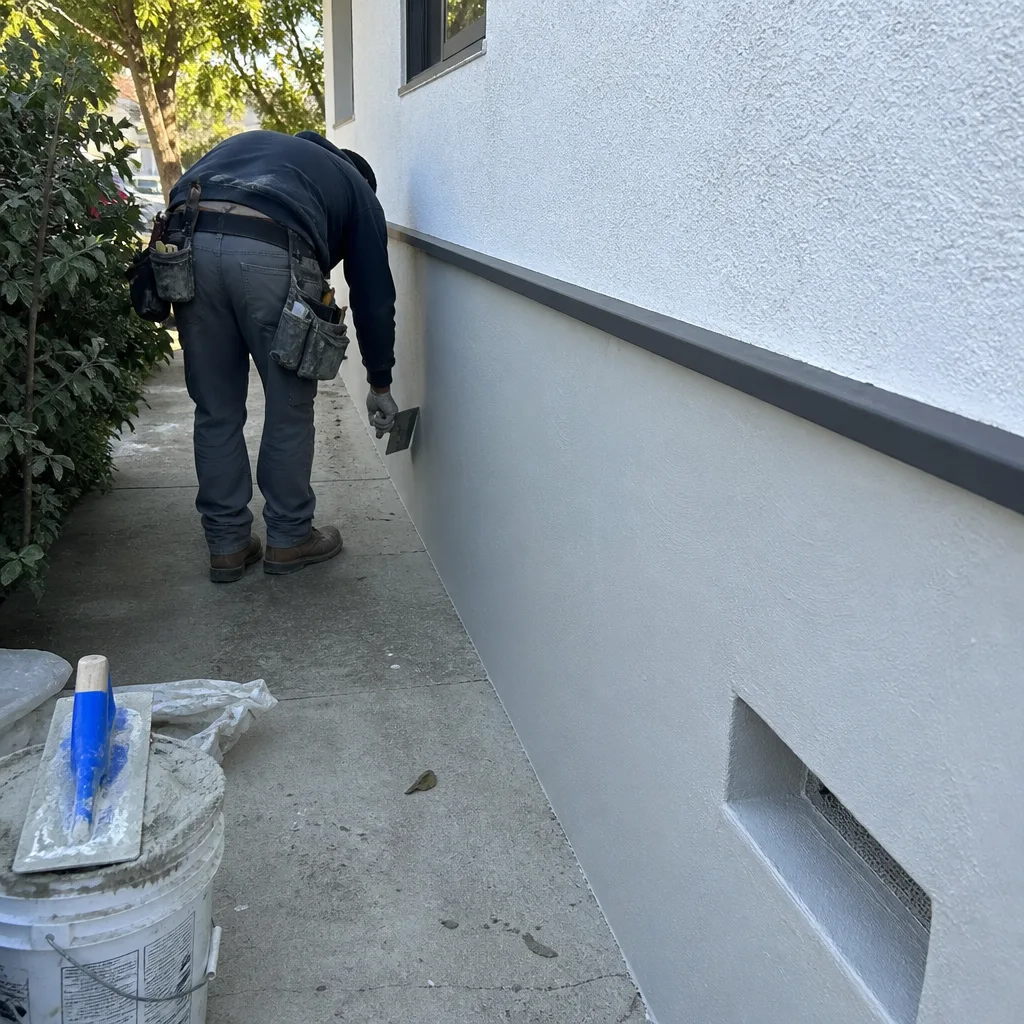
Ventura’s marine layer sits over the city most mornings, especially in neighborhoods west of the 101 and near the coast. If you are having exterior work done, framing, stucco, siding, or painting, watch whether the crew covers exposed wood at the end of each day. Lumber left uncovered absorbs that overnight moisture, and if it is covered by stucco or siding before it dries, that moisture is sealed into the wall. In coastal Ventura, this is one of the most common causes of premature rot in exterior walls.
Hillside Drainage Ignored During Excavation
Homes in the Ventura hillsides and in neighborhoods like Ondulando and Clearpoint sit on slopes that redirect water in ways flat lots never do. If your remodel involves any excavation, foundation work, or landscape grading, watch whether the contractor discusses drainage. A crew that digs without a drainage plan is a crew that will leave you with water running toward the house at the first winter rain. This is a Ventura problem, not a Phoenix problem, and your contractor should act like it.
Older Home Asbestos and Lead Paint Assumptions
Many Ventura homes were built before 1978, which means lead paint is a real possibility, and homes built before the mid-1980s may contain asbestos in flooring, insulation, or ceiling texture. If the crew starts sanding old paint or tearing out old flooring without any discussion of testing, that is a warning sign. Proper contractors test before they disturb. In California, contractors working on pre-1978 homes are required to follow lead-safe work practices, and skipping that is a violation of EPA rules.
Fencing and Gate Decisions That Ignore the Real Wind Conditions
Ventura’s afternoon winds, especially in the east end and along the hillside corridors, are strong enough to destroy an improperly installed fence or gate. When reviewing fencing work, whether for privacy, pet containment, or pool safety, look at post depth and post anchoring. Posts set shallowly will lean within a season. Brands like Jerith and Bufftech manufacture fence and gate systems designed for exactly these wind loads, and a Ventura contractor who installs them is making a different quality decision than one who buys whatever is cheapest at the local supplier.
The point across all of these: a contractor who understands Ventura is a contractor who builds for Ventura’s conditions, not for a generic California climate. When we walk a job site for general contracting in Ventura, these are the conversations we have before the work starts, because they are the conversations that prevent failures after the work is done.
How to Document What You See: A Step-by-Step Record
You do not need to be an inspector to create a useful construction record. You need a phone, a notebook, and a habit of documenting at the same point in the process every time. Here is the system we recommend to Ventura homeowners, and it is the same system a careful contractor will respect.
- Photograph everything at the end of each work day. Walk the site and take photos of the current state of the work, including the areas that look finished and the areas that look rough. These photos become your timeline and your evidence if a dispute arises.
- Keep a simple daily log. Write down the date, who was on site, what work was performed, and any observations. Three sentences a day is enough. This log is the single most valuable document you can produce in a dispute, because it shows a pattern over time rather than a single complaint.
- Save every written communication. Emails, texts, and written notes from site conversations should be stored in one folder. If you have a verbal conversation that matters, follow it up with a text or email that says “confirming our conversation today, you said the rough inspection will be scheduled for Tuesday.” That creates the record.
- Photograph problems specifically and identify location. When you see something wrong, photograph it with enough context that someone else can find it later. Wide shot first, then close-up. Note which room and which wall or surface.
- Request a written response to every concern. Do not let a concern exist only in conversation. Ask the contractor to respond in writing to each item you raise. If they are unwilling, that tells you something important about how they will handle larger problems.
This documentation habit protects you and also protects a good contractor. When expectations are recorded, there is less room for misunderstanding, and the project moves more cleanly.
Common Mistakes to Avoid
- Paying the final invoice before doing a walkthrough. Your leverage is the final payment. Once it is gone, your ability to get anything fixed depends entirely on the contractor’s goodwill. In Ventura’s busy remodeling market, that goodwill has a way of being consumed by the next project.
- Assuming the building inspector catches everything. Inspectors verify code compliance at specific stages, not workmanship. They are not looking for uneven grout lines or cabinet doors that rub. That is your job.
- Accepting verbal promises that contradict the contract. If the contractor says one thing in person and the contract says another, the contract is what governs. Get every verbal promise in writing or do not rely on it.
- Ignoring small warning signs because the crew seems nice. A polite crew that skips dust barriers is still a crew that skips dust barriers. Behavior on site is the truest signal you have about what is happening inside the walls.
- Withholding payment without written notice. California law protects homeowners, but the process matters. Document the defects, notify the contractor in writing, and give them an opportunity to correct before you withhold.
- Hiring a contractor based on price alone in a coastal market. Ventura is expensive for a reason: materials cost more, labor is in demand, and the building code is strict. A bid that is dramatically below the others is not a deal. It is a warning sign wearing a different outfit.
- Final walkthrough without the contract in hand. The walkthrough is not a casual stroll. It is the point in the project where you verify that the work matches the contract. Bring the contract, bring your daily log, and bring the list of every concern you raised along the way.
When to Call a Professional
Some warning signs you can resolve with a conversation. Others require a professional. If you see structural cracks wider than a quarter inch, water staining on ceilings below bathrooms, or any evidence that electrical work has been done without inspection, stop and get an independent professional involved. These are not cosmetic concerns; they are safety and integrity concerns. If you are in the middle of a remodel and feel the contractor is not responding to written concerns, bring in a second opinion immediately. The cost of an inspection is a fraction of the cost of opening up a wall to fix what was hidden.
If you are planning a remodel in Ventura and want to avoid these problems before they start, Elmstead Remodeling Ventura offers free estimates and a written price before any work begins. Call (341) 218-4316 to schedule a walkthrough.
Frequently Asked Questions
The biggest red flag is a contractor who asks for a down payment above California’s legal limit of 10% or $1,000, whichever is less, because a contractor who violates state law on the deposit is likely to violate other protections too. Beyond that, the absence of a posted permit on a Ventura job site is the clearest physical warning sign that the crew is not following local rules.
Ask for the permit number and verify it with the City of Ventura Building and Safety Division, then confirm that every required inspection was signed off. The inspection sign-off is your proof; if the contractor cannot produce it, the work has not been verified by anyone except the contractor.
A Ventura construction contract should include a start date, a completion date, a payment schedule tied to milestones, a lien waiver clause, a change order process, a dispute resolution clause, and the contractor’s license number. Any contract missing these elements is incomplete no matter how many pages it runs.
California law allows you to withhold a reasonable amount for defective work, but you must notify the contractor in writing of the specific defects and give them an opportunity to fix them before you withhold. Document everything in writing and consider an independent inspection to support your position.
A dramatically lower bid in Ventura usually means something is being left out: permits, waterproofing, named-brand materials, or the labor required to do the work properly. Coastal California is not a market where honest contractors have 30% more cost than their competitors; a bid that far off is a different scope wearing the same label.
Walk the site daily if you are living in the home during the work, and at minimum once per week if you are not. The physical signs described in this guide, drywall screws too deep, uneven grout lines, missing waterproofing, are visible in the moment and invisible once covered. Your daily presence is itself one of the strongest quality controls available.
The Bottom Line

Construction warning signs are rarely hidden. They are visible on the job site before the work starts, in the walls while the work is happening, and in the finished room before you pay. What they require from you is attention and documentation, not expertise. In Ventura, where the marine layer and hillside lots and older homes create conditions that punish shortcuts, that attention matters more than in most places. Read the contract before you sign it, walk the site before you pay, and document everything in between. Every home in this city was built by someone, and the difference between a home that lasts and a home that surprises you is the care taken at each of those moments. For more guides & resources on protecting your Ventura home, explore our blog.
Written by Graham Stein, Owner at Elmstead Remodeling Ventura, serving Ventura since 2005.
See the difference
 Before
 After
After Before
 After
After Before
 After
After